Did you know that your vehicle is only as good as the tires it rides on? You can have one of the fastest and most capable vehicles on the road, but none of that matters if the tires are bad. This is why tire maintenance should be one of your top priorities. It’s also why when looking for tire stores in Cincinnati, you should check out everything we offer here at McCluskey Chevrolet.
With nearly 13,000 glowing customer reviews, McCluskey Chevrolet is proud to be the leading Chevy dealership in the area. But what truly sets us apart is our exceptional service department that extends our relationship with you beyond the initial sale. You see, we’re not just here to help you find the Chevy of your dreams; we’re also here to ensure it safely and reliably performs for many miles down the road. That’s the McCluskey Chevrolet difference.
We know that tire maintenance can be daunting, especially if you’ve never really given your tires a second thought. That’s why we’ve put together everything you need to know about your tires, wheels, and rims, from their roles in your vehicle’s operation to the different types of tires and their capability. It’s all right here!
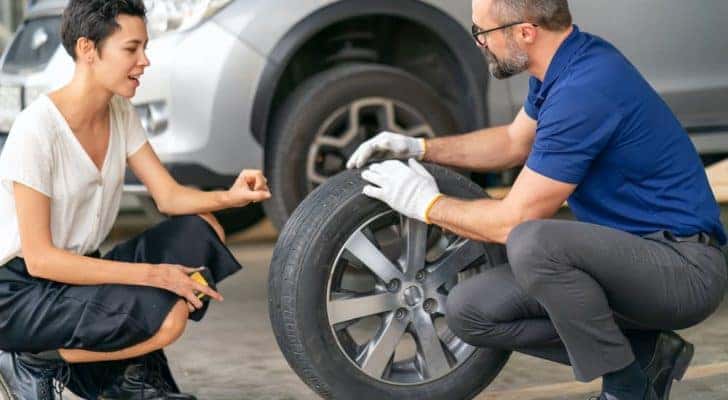
Many people, including certified technicians and industry experts, talk about tires, wheels, and rims as one unit or use the terms interchangeably. The truth is, however, that each component is separate and plays a unique role in safely keeping your vehicle on the road. Understanding the difference between the tire, wheel, and rim is the first part of responsible tire maintenance. After all, how do you know what’s worn, broken, or damaged if you don’t know what the different parts are?
The wheel is exactly like the caveman’s early invention; why change something that works? Think of the wheels of your vehicle like legs that help it move. The wheel itself is the round unit that the tire wraps around. The wheel features spokes, lug nuts, and rims that all work to keep the tire in place. Yes, the rims are actually part of the wheel!
The rims are the outer edge of the lips of the wheel, and are where the bead of the tire rests. The tire bead is a round hoop of steel wires that strengthen the tire, helping it to stand and support the weight of the vehicle. This positioning is why the rim typically determines the size of the tire since a proper fit is vital to optimizing the vehicle’s performance, stability, and safe operation at any speed.
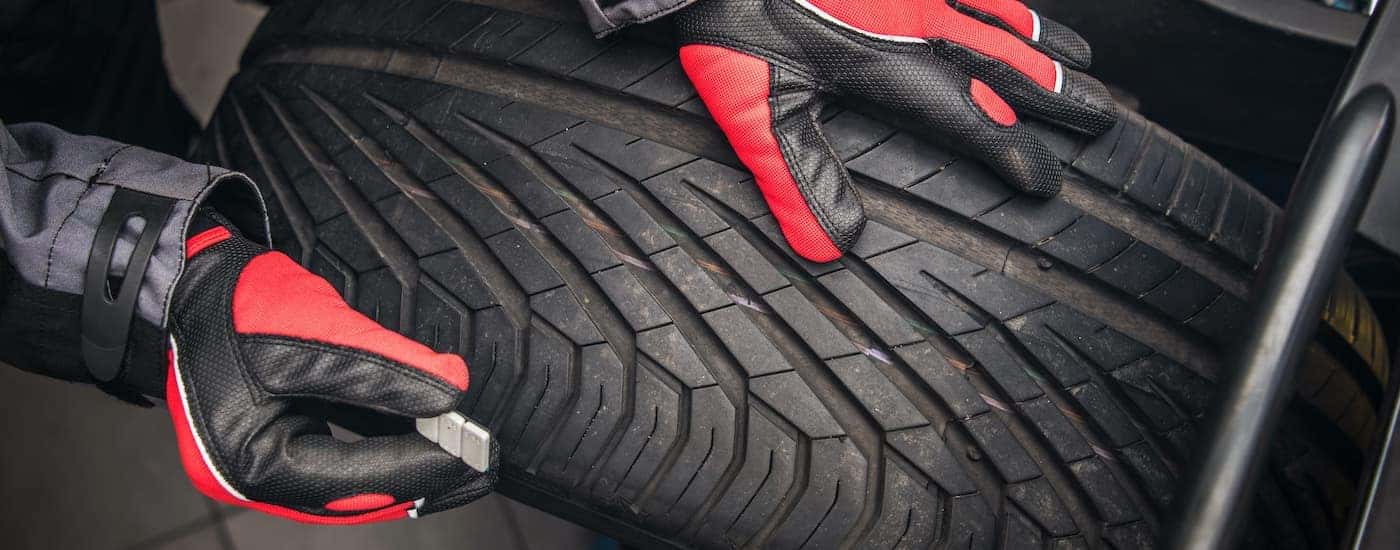
Most people know that they need a tire on a wheel rim, but it's not always made clear what they should be looking for in the construction of the tire that best suits the rim size and vehicle designation. In addition to that, it's also important to know which tires are best suited for certain kinds of weather, and this requires understanding the anatomy of the tire, both inside and out. The tire is composed of various components layered from the inside out, including:
Understanding the basic construction of the tire makes it easier to know what you need when it comes to selecting the right tire for your vehicle. Making use of the sidewall descriptors can also help you. The letters/numbers on the sidewall indicate the type of tire it is, the tire's millimeter width, height aspect ratio, the rim diameter (so you know what tire to fit on the rim), the load index, and the thread performance. With this information and the knowledge of how a tire is constructed, you can easily find the right kind of tire for the vehicle you're driving and the weather/road conditions you plan to drive it in.
There are multiple ways to tell if you need new tires, including visually looking at the tire as well as mechanically how the vehicle handles on said tires. Worn down tires typically cause vibrations during travel, as well as wobbly handling or unstable traversal on the road. If you feel as if the car is pulling in one direction or the other, it might mean it's time to change your tires.
Alternatively, you can check the visual wear and tear on the tire just by looking at it. If you see cracks on the sidewalls or notice that the tread blocks are almost completely shaved down and that various parts of the surface of the tire are bald or smooth, then it means it's definitely time to replace the tires. You can also place a penny in the groove of the tire upside down, and if you can see Lincoln's face, it means it's time to replace the tire.
Another thing to consider is that some tires may not show a lot of wear on the outside but may instead have wear in other places, including consistently losing pressure. If you notice that a tire is constantly flat or losing air, that's yet another sign that it's time to replace the tire, especially if you regularly keep the tires filled. This is an indication that the tire has a puncture, hole, or leak somewhere, and it's imperative that if the tire is damaged in any way, it should be replaced as soon as possible. However, if the tire pressure is good, but the ride is still uneven, and you notice visual degradation of the tire, then it's time for a replacement.
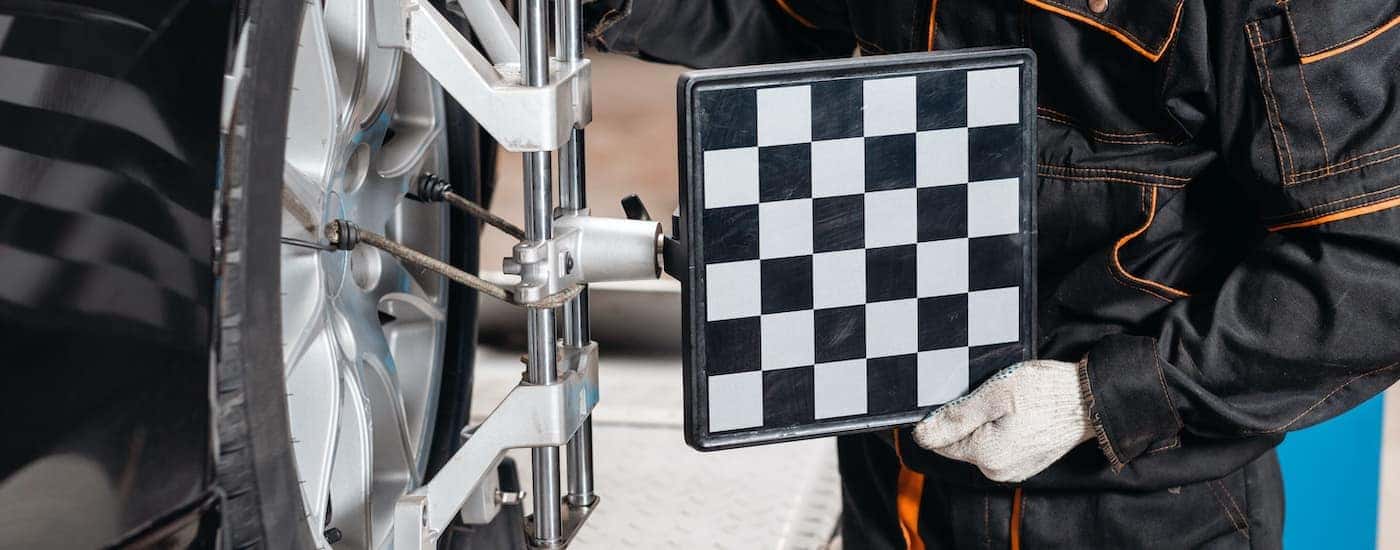
Some people think that getting new tires solves all their problems and that there's no real reason to worry about the vehicle after that. However, it's not entirely that simple. Getting new tires is just part of the process, and if you're considering getting an alignment along with your new tires, the simple answer is that yes, you should absolutely get an alignment with your new tires.
Why? Well, because if you were riding on your old tires and encountered misalignment while driving, or noticed that the vehicle was veering to the left or right, then it could mean that the worn-out tires contributed to the wheels becoming misaligned. The longer you ride on bad tires, the more likely the wheels lose alignment. This is why even after you ditch the old tires, it doesn't mean you're entirely out of the woods.
Along with getting new tires from McCluskey Chevrolet, you should absolutely have our mechanics give the vehicle an alignment inspection and an actual alignment if possible. This way, you not only set the vehicle back to its proper standards, but you can also get the absolute most out of your brand new tires. Getting an alignment with new tires also means fewer visits to the mechanic and less money spent on maintaining your vehicle in the long run.
BFGoodrich has been one of the go-to brands for many tire customers when it comes to getting new tires or replacing old tires. The company has a rich history dating back well over a century and has not only established itself as a respectable brand in motorsports but consistently is looked to as a reliable brand for a wide range of different vehicles. You have a lot of solid, quality-made tires to choose from when it comes to BFGoodrich.
Bridgestone has been around nearly a century, not quite as long as BFGoodrich, but the company is considered one of the best tire makers in the world today. Not only is Bridgestone widely regarded as one of the best tires in the racing segment, but you can count on the company providing equally effective tires for production vehicles driving on the street or off-road as well. Reasonably priced and smooth on the road, you can't go wrong with Bridgestone.
Dunlop has been around for more than a century, getting its start as a company providing tires for vehicles traveling the winding roads of Ireland. The company now provides tires internationally for all manner of different vehicles. Dunlop tires are typically well regarded for those that need solid threads for all-season or touring purposes, making them excellent picks for those with sedans or SUVs.
Goodyear is easily one of the most recognized tire brands in the world. Goodyear is also considered one of the best brands for production vehicles. With well over a century of providing tires for vehicles around the world, Goodyear tires are as reliable as they are durable. You'll find that not only are they excellent for basic travel, but also for off-road and extreme driving as well, making them a top pick no matter what kind of vehicle you drive.
Michelin has been around for about as long or longer than many other popular tire brands. Originating out of France, Michelin eventually became a global provider of tires for all manner of vehicles the world around. Michelin is not only a company known for delivering high-quality threads for street vehicles, but it also established quite the reputation for helping many top-end racing teams achieve the pole position throughout the years. An equally excellent choice for motorsports and production road vehicles alike.
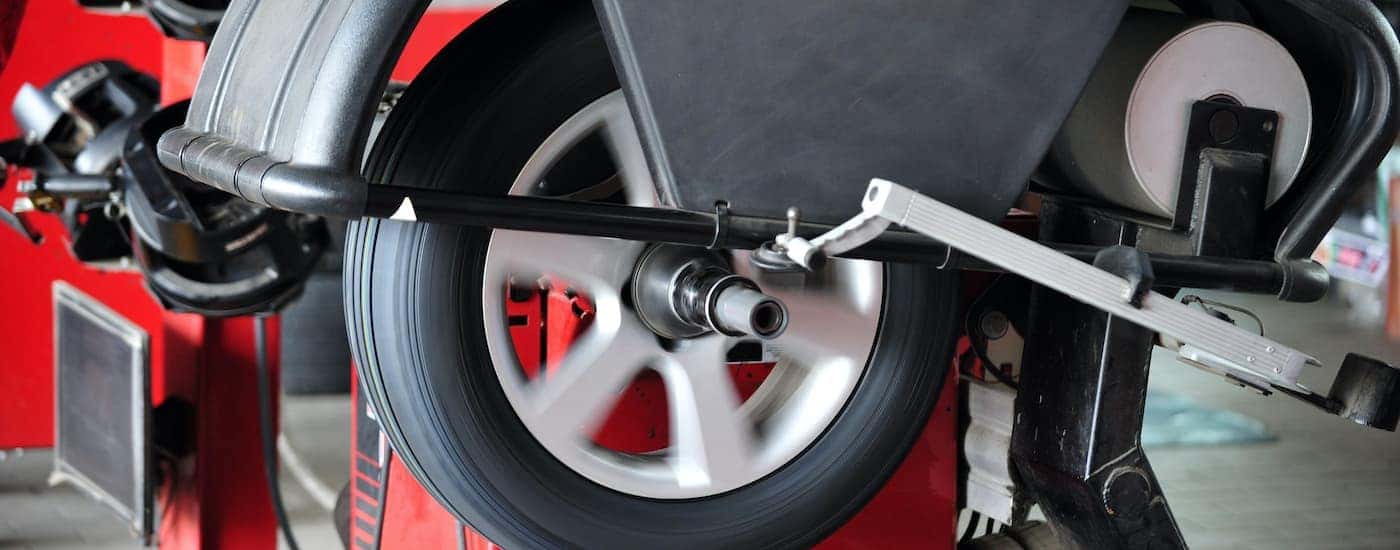
Pop quiz! What’s the difference between your wheel, tire, and rim? Even with the answer right in front of you, we know that maintaining your tires can be overwhelming, and that’s why we’re here to help. Our certified service technicians are experts, which means you can put your trust in us to ensure your tires are safe and ready for the road.
Our certified service experts know the ins and outs of every tire and vehicle. This means that you don’t have to think twice about bringing your vehicle into the shop or mastering tire maintenance on your own. We’re here to help with it all, from alignments and rotations to pressure checks and beyond. We’ve even included a rundown of basic tire maintenance and common signs that it’s time to bring your vehicle in for service.
Another great reason to rely on the McCluskey Chevrolet team for your tire needs is that we’re not just here for maintenance; we can also help you find the best tires for your vehicle. Do you spend most of your time on the highway commuting to work, or do you enjoy heading off the beaten path for a little dirt road adventure? Whatever the case, our team can guide you to selecting the right size and type of tire as well as ensure you’re eligible for one of the many available rebates from tire manufacturers like Goodyear, Continental, or Bridgestone. We’ll not only help you shop for tires, but we’ll also help you save money. Now that’s service!

Are you overwhelmed by the sheer number of options you have in your search for a new set of tires? Are you looking for a reputable service department that can help with routine tire maintenance? Whatever your tire needs, McCluskey Chevrolet is here to help.
Our state-of-the-art service department can easily handle all your maintenance needs, from tire pressure checks and measuring tread depth to alignments, rotations, and balancing. Our technicians are certified, and that means you can rely on their expertise to not only get the job done but to get it done correctly and efficiently so that you’re back on the road in no time at all. That’s just one of the many perks of letting our team handle your tire needs.
Swing by the service center and meet the team. Not enough time in the day? We get that too, which is why you can schedule your service appointment online. That’s the difference of choosing McCluskey Chevrolet––we constantly put our customers first and do everything possible to get you in and out of the center and our dealership so that you have more time for what truly matters––making memories on the road with the people you love.