



2026 Chevy Silverado EV vs the Competition: Why This All-Electric Truck Could Finally Make You Switch
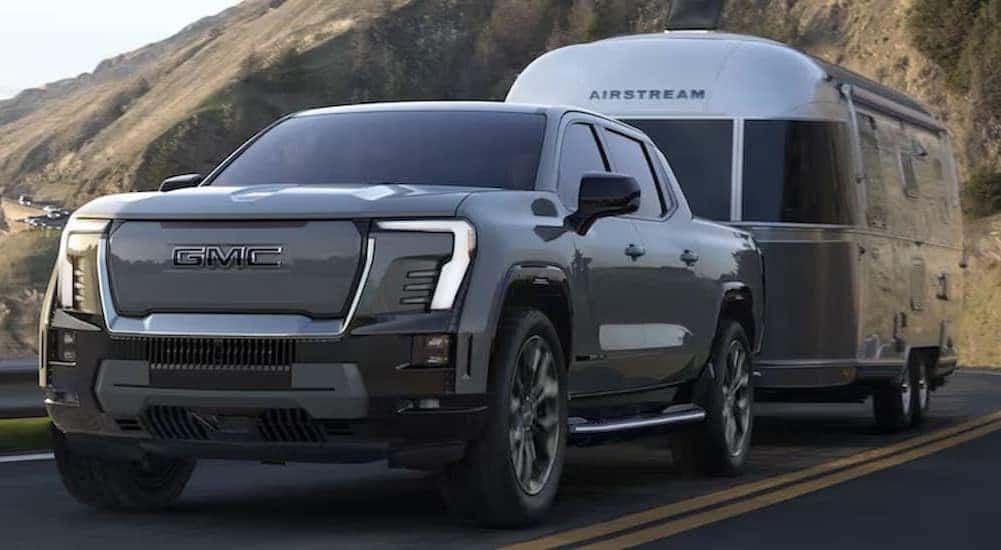
If you’ve been driving full-size trucks for years, you know the drill: durability, power, towing—whatever you throw at it, the truck takes it and keeps going. So when electric trucks started showing up, you probably thought, “Nice idea, but can it really do the job?” That skepticism was rightfully placed. If you’re pulling a trailer five days a week or hauling gear off-road every weekend, you have real demands. And nobody wants to be stranded at a job site because of a dead battery. That’s why Chevrolet built the answer you’ve been waiting for.
Enter the 2026 Chevy Silverado EV—a truck designed not just to answer the questions but to change the mindset. What if going electric didn’t mean compromising capability? What if it meant upgrading? Over the next few minutes, we’ll walk through why the 2026 Silverado EV is built to convert truck-loyal drivers, and compare how it stacks up against other big names in the game. By the end, we think you’ll see it not as a gamble, but as a smart move.
Why Many Truck Owners Haven’t Switched Yet
One of the biggest reasons truck buyers hold off on EVs is a simple one: they don’t want to give up capability. Towing, payload, ruggedness—those are big stakes. Questions like “Can I still haul a 12,000-lb trailer?” “I work in remote sites—can I plug in or get power?” and “Can I still go off-road and tow gear?” are fair questions, and ones that you may have already asked yourself. What you should know is that EV trucks have made strides, but if you’re used to a gas V8 or diesel-powered engine, some doubts may understandably linger. And it’s not just the vehicle—it’s infrastructure, charging time, maintenance, and resale value.
Yet the 2026 Silverado EV is aimed squarely at answering those concerns. It promises range, capability, utility—and yes, ruggedness. While other EV trucks may target early adopters or city commuters, Chevrolet is clearly saying, “We built this for you, the truck owner with real demands.” By directly addressing the traditional trucker’s checklist, the Silverado EV shifts the conversation from “Will an EV even be capable of handling a demanding workload?” to “Will an EV do everything my current truck does, and better?”
Power & Performance: Silverado EV vs the Rest
The specs that matter most to you: horsepower, torque, towing, and payload. The Silverado EV lineup brings serious numbers. For example, the standard dual-motor setup produces 510 hp, while higher trims increase this to up to760 hp and 775 lb-ft of torque. Maximum towing capacity is listed at 12,500 lbs, with payloads of up to 2,350 lbs available in certain trim levels.
Now let’s look at two major rivals:
Ford F-150 Lightning: The most powerful option delivers 580 hp and 775 lb-ft of torque, with a maximum towing capacity of 10,000 lbs when properly equipped at its best. The max towing capacity of its base powertrain sits at a mere 7,700 lbs. Although its torque output is respectable, it falls behind the Silverado EV in nearly every metric. For example, the 2026 F-150 Lightning has a maximum payload capacity of 2,000 lbs, which requires stepping down to its weakest powertrain, delivering 452 hp.
Rivian R1T: Its base dual-motor configuration sports 533 hp, with a towing capacity of up to 11,000 lbs when equipped—the standard dual-motor setup has a towing capacity of only 7,700 lbs. Although the Rivian R1T has the means to deliver more power than the Silverado EV when properly equipped, it’s a far costlier truck, even in its base configuration, where it already falls short of the Silverado EV in categories such as fuel economy, towing, and payload.
What stands out is that the Silverado EV not only keeps pace but, in certain trims, outperforms in key metrics. For someone hauling, towing, towing again—it’s not a side note—it’s central. The Silverado EV checks your boxes: power, torque, real towing, and still delivers an electric advantage.
Range, Charging, & Everyday Usability
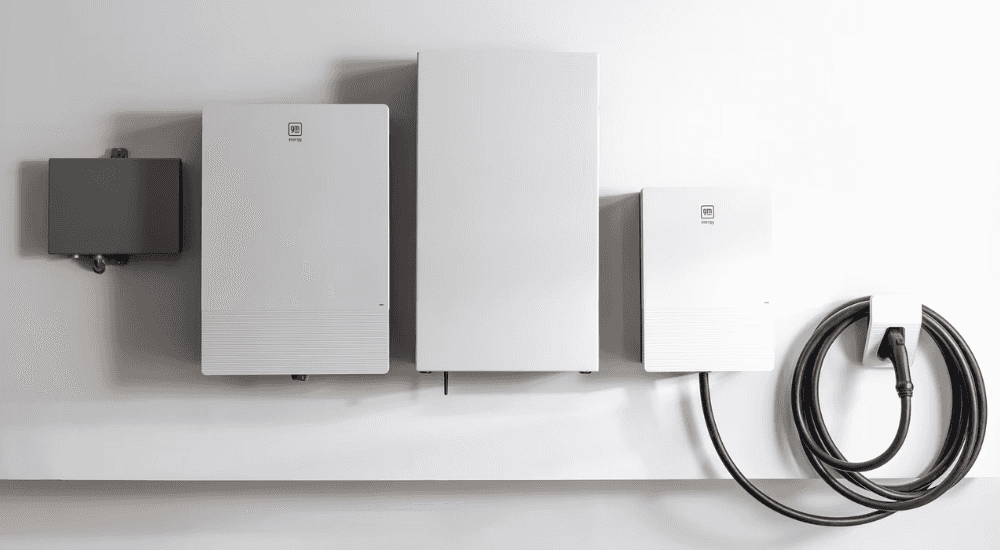
One of the biggest lingering doubts: “Can an electric truck really handle long trips and workdays?” On that front, the Silverado EV makes a strong case. The Silverado EV can travel an EPA-estimated 493 miles with its largest battery. Additionally, it supports up to 10.2 kW of off-board power (so you can use it at job sites to power your tools and other equipment) and fast-charging capability.
Meanwhile, the competitors: The F-150 Lightning’s extended-range pack reaches approximately 320 miles, featuring a 131 kWh battery with two electric motors. The Rivian R1T has a range that caps out at around 420 miles, with just 270 miles for its smallest battery.
But numbers aside, what’s meaningful for you—home charging convenience, real-world usable range when towing, and less maintenance hassle—has been carefully considered in the design of the Silverado EV. With the Silverado EV, you have a full-size truck and the freedom an electric powertrain allows. No routine oil changes, fewer moving parts, instant torque—the list goes on. For a weekend warrior, contractor, or everyday commuter who also tows—this isn’t a compromise. It’s an upgrade.
Interior, Tech, & Features: Modern Innovation Meets Classic Truck DNA
When many think of electric trucks, they may think of compromised interiors, but not here. Inside the Silverado EV, you’ll find a cabin that balances truck practicality with a premium look and feel. A 17.7-inch infotainment touchscreen and an 11-inch digital driver display are standard across all trims. Higher-tier trims add heated and ventilated leather seating and the Multi-Flex Midgate system, which expands cargo capacity, enabling you to fit more gear, bikes, camping gear, and tools. The Silverado EV also features a front-end trunk, known as an eTrunk, which offers an additional 10.7 cu.ft of space.
Compared to the F-150 Lightning and Rivian R1T, the Silverado EV adopts a more traditional truck layout, which many drivers prefer—offering familiar switchgear, an intuitive layout, and the confidence of a brand they’ve trusted. Rivian offers tech and off-road cues—cool—but if you’re a trucker first, you’ll appreciate the Silverado EV’s blend of tech and function.
And the numbers don’t lie—the F-150 Lightning has a standard 12-inch infotainment center—15.5 inches on higher-tier models—while the Rivian has a 15.6-inch screen for its infotainment center. While these screen sizes aren’t vastly different, many people tend to prefer Chevy’s infotainment systems for their thoughtful and intuitive designs and functionality. Whether you’re commuting to the jobsite, towing the trailer, or driving the family, you get comfort, refinement, and utility with Chevy’s electric pickup.
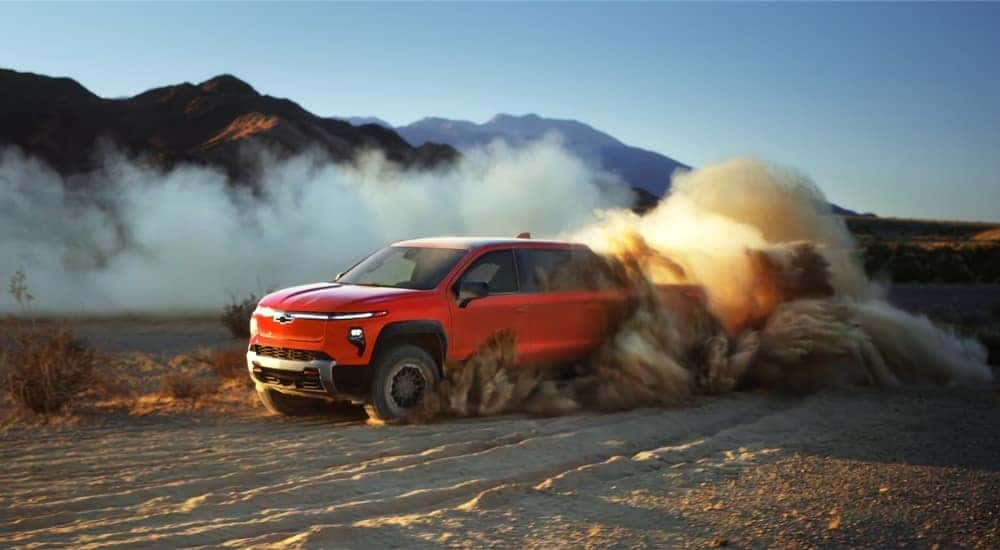
Why the Silverado EV Might Finally Win You Over
When you step back and look at all the pieces—capability, range, tech, and usability—the 2026 Silverado EV checks the major “yes” boxes. You’re not being asked to make trade-offs. Instead, you’re being offered a truck that works better, is more efficient, and still delivers power. The days of thinking that electric trucks are for suburban drivers only are fading.
While competitors bring strong arguments, the Silverado EV brings the one you care about the most: pure truck DNA, empowered by electric performance. For you, someone who uses their truck, who expects toughness, who won’t settle for less—this is a real contender. Average commute? Check. Towing a trailer full of gear? Check. Living in an area where you might appreciate “plug-in overnight and go” convenience? Double check.
You’re Ready, Whether You Know It or Not
If you’re done watching electric trucks on the sidelines and ready for one that aligns with your work ethic, your lifestyle, and your expectations, this is the one. The 2026 Chevy Silverado EV isn’t about handing over your truck and hoping electric “works”; it’s about going electric without giving up what you do. For people like you—who haul, tow, work hard, and play harder—this is meaningful. It’s time to move past “Will it work?” and start asking, “How much better is an EV truck going to make my day-to-day?” So, if you’re ready, the Silverado EV is ready too.

0 comment(s) so far on 2026 Chevy Silverado EV vs the Competition: Why This All-Electric Truck Could Finally Make You Switch