



2026 Chevy Trax vs 2026 Hyundai Kona: Which Subcompact SUV Offers Better Value?
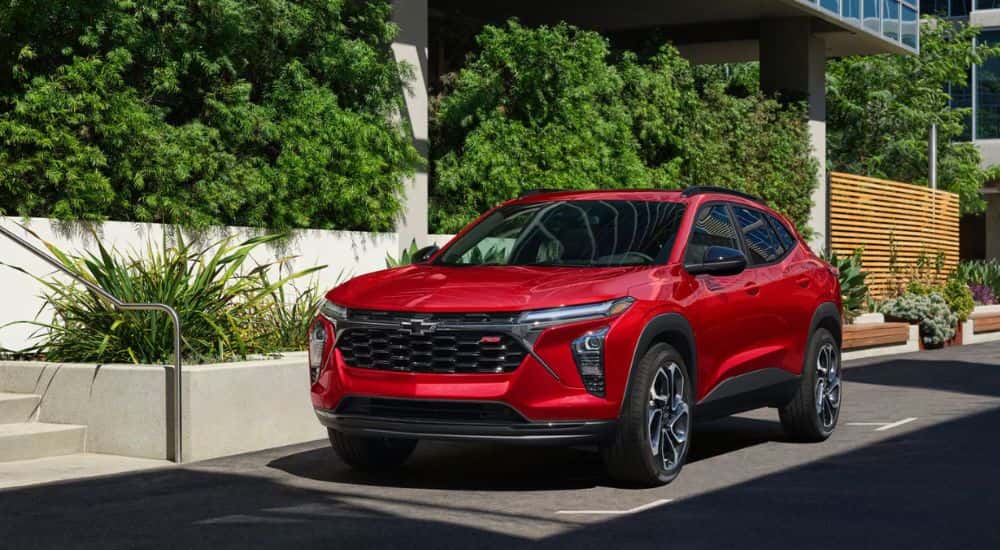
Many drivers choose a subcompact SUV over a larger option because of its affordable price point, modern design, greater maneuverability, or improved fuel economy. In 2026, Chevrolet and Hyundai each introduced updated versions of their subcompact SUVs, making the 2026 Chevy Trax vs 2026 Hyundai Kona a key comparison for shoppers.
Both vehicles have their benefits and drawbacks when directly compared, but the numbers don’t tell the whole story. This comparison dives into the major practical differences between each model, with a focus on affordability and capability, which are the two most important aspects of a subcompact SUV.
The Interior Experience
Subcompact SUVs need to optimize their available interior space to best provide the spaciousness you’d expect from an SUV while staying within a tighter footprint. It’s not just about the numerical amount of space in inches, but about how well each vehicle uses the available space in efficient, intelligent, and useful ways.
Both the Chevy Trax and Hyundai Kona deliver a comfortable experience for both the driver and passenger rows, with an emphasis on easy-to-access technology features and stylish design elements. Both can seat five passengers and provide enough trunk space for groceries, while the rear seating can be laid flat for even more room.
Hyundai Kona: High-Tech Style
The 2026 Hyundai Kona offers a sporty interior and available technology that can be enhanced with higher trim levels. Snug yet stylish seating keeps both the driver and passenger side comfortable. The infotainment system is oriented towards the driver for added convenience, and is inset into the dashboard for improved visibility.
The accessibility of these improvements at a high trim level means the more affordable base model could be perceived as lacking in features. But if you’re willing to spend more on the Limited or SEL Premium trims, you can expect a degree of technological uplift and immersive high-end features.
Chevy Trax: Spacious and Practical
The 2026 Chevrolet Trax makes exceptional use of interior space by optimizing the balance between front seating, rear seating, and available trunk space. Rear seating space is typically a point of contention in subcompact SUVs, yet the Chevy Trax delivers a surprisingly roomy experience without sacrificing modern comforts.
Even at lower trim levels, the thoughtfully designed cabin ensures passengers have plenty of room to stretch, while optional features like the available heated front seating add to the luxury comfort, without feeling like a necessity for those targeting a lower budget. Compared to the Kona, the Trax offers an accessible blend of comfort and practicality that appeals more to everyday drivers.
Choose the Chevy Trax for Affordable Comfort
For shoppers focused on maximizing value in a small SUV, the Kona’s strongest interior features are tied to trims that push the vehicle further from affordability. While the driver-focused interior ensures the driver remains comfortable on every journey, the real draw of a subcompact SUV is that it also supports passengers.
The Chevy Trax beats the Kona in terms of practical space for everyone, with a meticulously balanced ratio between rear seating leg room that doesn’t sacrifice usable trunk space. This makes it the perfect choice for those looking to maximize interior comfort for those long drives with passengers in the back seat.
Power, Performance & Efficiency
One of the major benefits of choosing a smaller SUV is more responsive performance off the line and better overall fuel economy. That said, you should still expect even a smaller SUV to have enough power and available torque to get some enjoyment out of your highway drives. Despite their size, both the Kona and the Trax deliver on performance in different ways.
Both compact SUVs target impressive strength and efficiency that ensures you can drive consistently smoothly for many miles. Drivers can expect 30 MPG from the Trax and the marginally similar 31 MPG from the Hyundai Kona, making them both exceptionally efficient compared to other SUVs.

Hyundai Kona: Sporty Performance
The 2026 Hyundai Kona has a 2.0L engine that produces 147 hp, delivering surprisingly sporty performance that can be further enhanced with higher trim levels to 190 hp. However, higher hp in upper trims is more noticeable during highway acceleration, while everyday city driving tends to benefit more from low-end torque.
Chevy Trax: Power You Can Count On
The 2026 Chevy Trax comes with a 1.2-liter turbocharged engine that delivers up to 162 lb-ft of torque. This optimized turbo engine delivers faster response times when navigating the city or busier highway interchanges, and the extra torque feels especially useful during uphill climbs or stop-and-start traffic.
Choose the Chevy Trax for Practical Strength
Your choice between these two vehicles in terms of performance will depend heavily on your personal driving style. The similar fuel economy means you can’t go wrong in terms of long-term value, but the extra hp provided by the sportier Hyundai Kona doesn’t see much practical use compared to the extra torque provided by the Chevy Trax.
Our choice for power and performance is the Chevy Trax. While the Kona has slightly higher hp, the Trax’s added power offers far more utility for a subcompact SUV. The Chevy Trax is the ideal choice for those needing dependable strength when it matters most, without having to spend more to access higher trims.
Overall Affordability
A major draw of the compact SUV compared to other options is its affordable price tag. Many sport utility vehicles target a lower initial price point so drivers can access the versatility and elevated driving experience of an SUV at a more reasonable cost. This means more manageable monthly payments while still offering modern features and spacious interiors.
The 2026 Chevy Trax has an MSRP starting at $21,700, while the Hyundai Kona has a higher MSRP starting at $25,500. [a] When you compare these two prices, it’s clear that the Trax has the edge in terms of affordability. It’s important to recognize where these costs go and what value you can gain from purchasing one of these subcompact SUVs.
Hyundai Kona: Overly Reliant on Higher Trims
While the base Hyundai Kona has an MSRP of $25,500, we already discussed that one of the major issues with this price tag is the lack of features available on the base model compared to higher-trim counterparts. When you look at the Limited trim, which is the only way to access advanced features such as blind-spot view monitoring, the MSRP jumps significantly to $34,250.[a]
This can move the Kona into a higher price range within the subcompact SUV segment. While this might be suitable for some, compare this to the Chevy Trax’s highest trim level (The ACTIV), which is substantially cheaper at an MSRP starting at $25,400 and offers many of the otherwise exclusive benefits you gain from upgrading the Kona.[a]
Chevy Trax: Affordable Across the Board
Affordability is a key concern when choosing the right compact SUV for your needs, which is why the Chevy Trax is engineered to deliver high-quality comforts without breaking the bank, with an exceptionally low starting price that remains reasonable across all trim levels.
Even the highest-level trim of the Chevy Trax, the ACTIV, has a lower price point than the cheapest version of the Hyundai Kona, making it an exceptionally better vehicle. This ultimately means that if you have the budget for the worst version of the Kona, you already have the budget for the best version of the Trax for an exceptionally better experience in almost every way.

We Recommend the 2026 Chevy Trax
We compared the major features of two popular subcompact SUVs: the Chevy Trax and the Hyundai Kona. While very similar in many respects, the two differ in several critical ways, which we addressed throughout this post, so that you can make an informed decision between the two options.
Our verdict leans heavily towards recommending the 2026 Chevy Trax for three core reasons:
- While the Kona provides a spacious interior, the Chevy Trax utilizes its space more intelligently for a more balanced passenger experience.
- The Kona has slightly more available horsepower, but it goes to waste during your daily drives, compared to the practical power of the more dependable Chevy Trax.
- Ultimately, the Hyundai Kona is significantly more expensive than the Chevy Trax, and that doesn’t translate into more features unless you go over your budget to select the Kona’s highest trim tier.
The best way to judge which model suits your needs best is to book a test drive with your local dealership and get a personal feel for the latest iteration of these impressive subcompact SUVs.

0 comment(s) so far on 2026 Chevy Trax vs 2026 Hyundai Kona: Which Subcompact SUV Offers Better Value?