



5 Crucial Car Maintenance Tasks You Shouldn’t Overlook
At McCluskey Chevrolet, our Certified Service Experts want our customers to understand and value the importance of routine car maintenance.
We know servicing your car costs precious time and money, but routine maintenance can be quick, easy, and will ultimately save you money in the long-term.
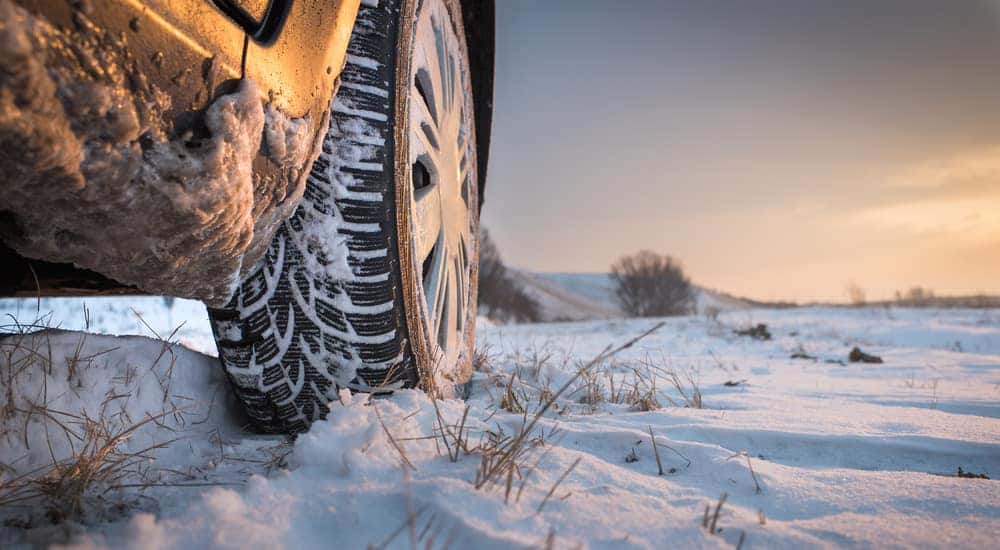
Although regular service is essential for optimal performance and driving safety year-round, it is especially important during our tough Cincinnati winters because vehicles tend to suffer additional, weather-related wear and tear.
Here are 5 crucial car maintenance tasks and what makes them essential to vehicles and drivers.
Consider scheduling your next maintenance appointment with our Certified Service Experts in our award-winning Service Department so that you can keep your vehicle road-ready, no matter the weather.
Tires
What good is a car without wheels?
It’s important that tires in Cincinnati are maintained, rotated and inflated properly for ultimate driving performance. Tires must be inflated correctly in order to support your vehicle. The air, not the actual tires, supports your vehicle.
Check the pressure listed in your vehicle owner’s manual or tire placard in order to ensure that your tires are properly inflated so that they wear evenly, thereby lasting longer. Properly inflated tires also increase fuel economy, and demonstrate better handling and traction, allowing for a smoother, more comfortable ride.
It is important to remember that temperature changes affect tire pressure. Tire pressure tends to drop during cold, winter temperatures, and increase during warmer, summer months. Seasonal changes are a critical time to check your tire pressure. The recommended tire pressure, listed in your owner’s manual or on the tire placard, is based on cold inflation pressure.
The best time to check your tire pressure is in the morning, before any temperature increases and before your tires are exposed to sunlight.
Tire pressure will adjust by 1 psi (pounds per square inch) for every 10 degrees F, meaning if the air temperature increases by 10 degrees F, the air pressure will also increase by 1 psi. The inverse is true. If the temperature drops 10 degrees, the psi will also drop by 1.
At the first sign of winter, check your tire pressure to ensure safe and effective winter driving.
Oil Changes
Okay, no one really likes scheduling an oil change into their already overbooked calendar. But this investment in time and money towards your car’s maintenance will pay off in the long run.
Possibly the most beneficial and low-cost service, oil is your car’s lifeblood.
The three purposes of engine oil are: keep engine components running smoothly, draw heat away from the combustion chamber, and prevent carbon and varnishes from building up in the engine.
Routine oil changes also offer valuable insight into how your car is running and provide a benchmark for its maintenance needs. Investing in routine oil changes can save you from shelling out more money to fix larger issues in the future.
Typically, at 3,000 miles, or every third oil change, a car’s tires require rotation. During an oil change, our Certified Service Experts will also check your car’s fluid levels.
A consistent need to add washer fluid or coolant may reveal a leak that needs to be fixed.
As part of your car’s oil change, our Certified Service Experts will also check your car’s belts, hoses, and safety items, including wiper blades, lights, and tires. Finding the time to schedule one quick oil change is an investment in your car’s future.
Brakes
Icy winter roads remind us how critical fast and effective brakes are every day, but especially during wintry conditions. Brake checks shouldn’t be limited to quick reactions behind the wheel, but routinely scheduled as part of your car’s overall maintenance.
The brake system is your car’s most important safety system, making brake maintenance essential to safe driving. Without proper maintenance, brakes cannot function as effectively, are potentially unable or slow to stop at a moment’s notice to avoid collision. It is important to check brake fluid levels and brake pads.
Low brake fluid levels can result in soft brake pedals, while squeaky brakes mean dirty brake pads, both of which can result in brake malfunction and potential accidents.
Brakes should be checked during oil changes, or at least every 6 months or 6,000 miles.
During your car’s oil change, our Certified Service Experts will visually inspect the brakes, measuring pad and shoe thickness, assess the wear of the pads and shoes, inspect rotors, check hardware adjustments, look for leaks in the wheel cylinders, brake lines and master cylinder, check calipers for wear, and ensure proper routing and placement of brake and antilock brake sensors.
Prepare for winter roads, check your brakes.
Fluids
Simple, but essential, your car’s fluids. Coolant, battery fluid, oil, brake fluid, and transmission fluid, each take only a few minutes to check and should be monitored regularly in order to keep your vehicle running smoothly.
Coolant, the water to oil’s lifeblood, prevents your car’s engine from overheating, and safeguards it against mechanical breakdown and possible engine failure. Generally, coolant should be changed every 30,000 miles, but consult your vehicle’s owner’s manual to find the exact recommendation.
Car batteries last between three to five years, but that lifespan can be increased by checking and maintaining their fluid levels.
Oil is critical to your car’s performance and must be checked every 3,000 miles for optimal driving performance and safety.
Transmission fluid cools and lubricates a car’s transmission, which helps transmit force and pressure in the transmission. Changing the fluid on a regular basis keeps the fluid clean and the transmission running smoothly. Old or dirty fluid can result in loss of acceleration, stick gear shifting, and even complete transmission failure.
Taking a few quick minutes to check each of these levels will enhance your car’s overall performance.
Filters
Your car’s filters are easy to maintain. Changing them often improves your gas mileage.
Clean filters mean better performance because clean filters allow fresh air to flow into the engine, making it run smoother, enhancing the drive. Your vehicle owner’s manual will outline how often the filters should be changed for your car.
However, filters are best changed on an as needed basis, and there are some tell-tale signs which will let you know it’s time to change the filters: decreased gas mileage, dirty or debris-clogged filter, poor acceleration, and trouble starting your vehicle, are red flags that your filters need to be changed.
Harsh weather conditions, like the winters we experience here in Cincinnati, also require more frequent filter changes. Depending on your car’s mileage, acceleration, and turn-over, it may be time to change your filters.
Paying attention to and keeping up with these five critical maintenance tasks will extend the life of your vehicle and enhance your driving experience, making it safer, more fun, and cost effective down the road.
Our Certified Service Experts here at McCluskey Chevrolet are ready to help you with any of your car service needs.Call our Certified Service Experts to schedule your appointment today.
update: 5/2021
More Tire Maintenance
Now, I know we already talked about taking care of your tires, but honestly, they’re so important that we needed to revisit this subject. Having the right tires in Cincinnati in good condition will not only provide you with a smoother ride but also ensure you stay in control of your vehicle. We talked about tire pressure quite a bit before, so let’s take a look at another important part of tire maintenance: the tread depth.
Tread depth really is just as important as the pressure in your tires because it indicates how worn the rubber is. Deep tread is also vital for maintaining control on wet roads, so your tires need to have good tread for handling rain and snow. Fortunately, checking the tread depth on your tires is quite easy.
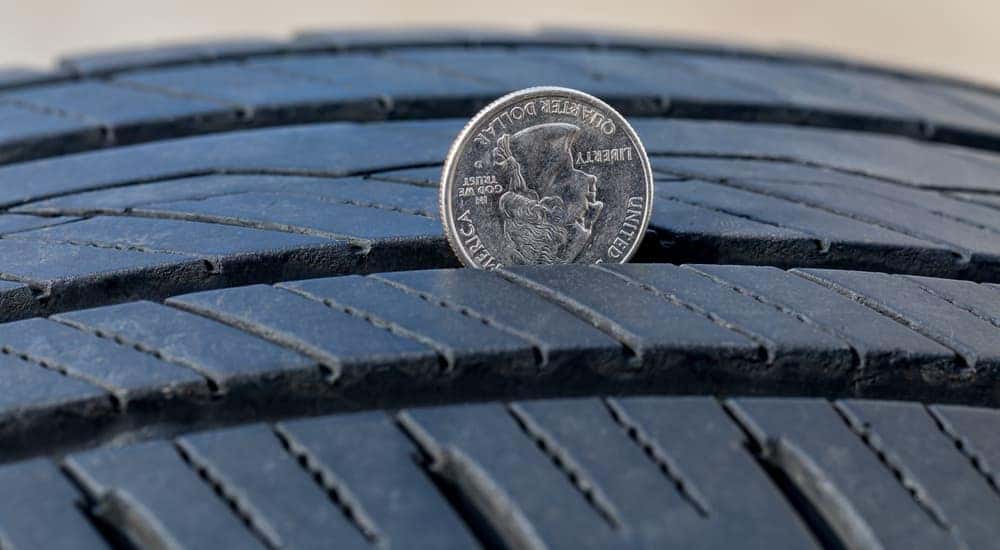
Get a penny or a quarter and insert it, with the President’s head facing down, into a groove on your tire. If you can see the top of the President’s head, then your tread is worn, and you need to replace your tires. Using a quarter gives you good advanced notice – with a quarter, you probably have a few weeks or a month to safely replace your tires. With a penny, if you can see the top of Lincoln’s head, then new tires are pretty urgent, so don’t wait.
Timing and Serpentine Belts
Depending on the age of your vehicle, you might have different types of belts or chains on your engine, but we’re going to keep this simple and address models from the last couple of decades. There are two belts that are part of your engine, which are very important for ensuring good performance and keeping your car running. We’re going to look at both of them because they each do something different, but they’re both vital.
First up, the timing belt on your engine is a rubber belt that connects the camshaft to the crankshaft – these are both parts of your engine. Without getting into too much detail, the camshaft essentially governs the timing of the engine valves opening and closing, while the crankshaft is responsible for moving the pistons up and down. These two things need to operate in concert so that your performance is what it should be – the timing belt connects them and ensures this proper timing for your vehicle.
The serpentine belt, on the other hand, is another rubber belt that keeps various parts of your engine all running smoothly, including the alternator and different fluid pumps. In the past, multiple belts were used, but as these could wear down at differing rates, it was annoying to monitor each one. A single serpentine belt handles these functions, and it’s a lot easier to replace one belt as it wears down.
Both of these belts are designed with rubber that’s engineered to last a long time, even with the heat of your engine nearby. Check your owner’s manual to see how often the manufacturer suggests you replace them. You can also have them inspected by a service professional you trust, particularly if your engine is running a bit off.
Check and Replace Your Battery
Few things are worse than getting in the car in the morning, ready to head off to work or go to an important meeting, and finding that your vehicle won’t start. The sound of an engine trying to start but quickly failing is one of the most aggravating things we can imagine. Of course, a completely dead battery might not even give you that. You turn the key and absolutely nothing happens, leaving you to sit and stew in frustration.
You can avoid this by having your battery checked pretty regularly to make sure it is still holding a charge. We suggest having your battery checked as part of other services – if you come in for an oil change, for example, we can easily check the charge on your battery. If you notice things like the lights of your vehicle being dimmer than usual, or you have trouble getting your car started, those can be warning signs that the battery is dying. Don’t hesitate, trust your instincts in those situations and have your battery checked and replaced when necessary.
Check and Replace Your Wiper Blades
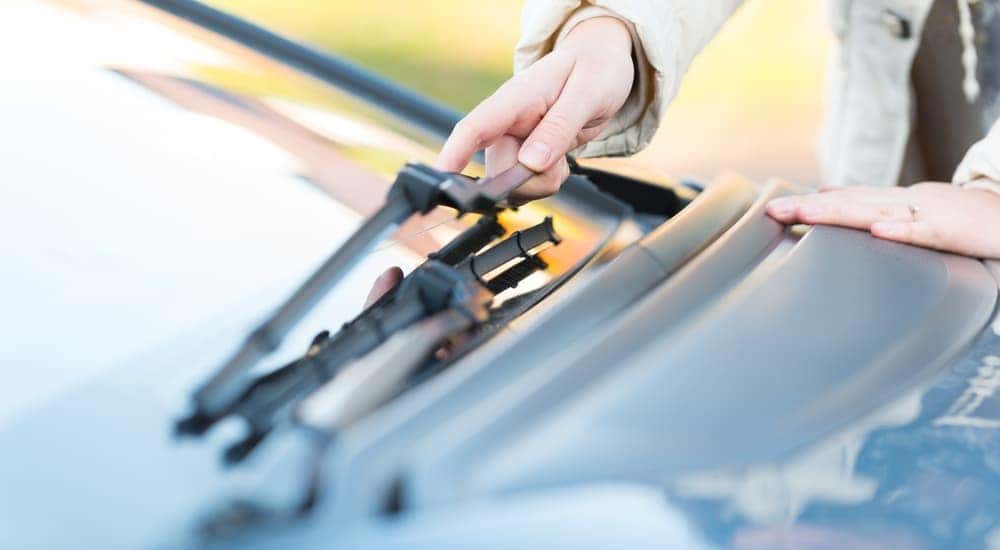
The wiper blades on your car are the type of things that are easy to forget about until you need them – and when you do, you need to be able to count on them. The last thing you want is to realize you need new wiper blades in the middle of a serious thunderstorm or other rough weather. Even during the winter, with snow and frost, having good wiper blades can make a big difference in your visibility behind the wheel.
We suggest you check your windshield wiper blades pretty regularly to ensure they’re not damaged and still making good contact with your windshield. Don’t forget other wiper blades you might have, like ones on the rear windows of some SUVs. Replacement wiper blades are inexpensive and easy to switch out yourself – you’ll probably need to replace them about once each year, though that can vary depending on your driving habits.
Go In for a Routine Inspection
We’ve been talking a lot about specific types of maintenance you should do to keep your vehicle in good shape, such as checking your tires and having your oil changed. Those are all important, of course, but one of the keys to good overall maintenance is having your vehicle inspected with more of a large-scale view. Life gets busy; we understand that, so it’s easy to only have time for something specific like a quick oil change, lube job, or having your battery changed so you can get back on the road.
When you come in for a wider inspection, however, it’s a great way for us to be able to catch things that might be a minor issue right now but have the potential to become a much larger problem in the future. For example, it’s a good idea to bring your vehicle to us regularly so we can check your fluid levels, check and replace air filters, and make sure your lights are all working and that your tires look good. About once a year, it’s also a good idea for a more thorough inspection of parts such as your transmission fluid, shocks and struts, brakes, and your alignment to ensure everything is how it should be.
We also suggest seasonal check-ups and inspections, particularly before winter weather rolls in. This is a great time to have your wipers checked, to check your battery, and change your tires for the cold. Finding time for these kinds of appointments isn’t always easy, but the benefits are well worth it.
Don’t Overlook Cleaning Your Vehicle
Whatever goes on with the interior of your vehicle is your own business, but we strongly recommend you clean the exterior on a pretty regular basis. Dust, dirt, moisture, salt, and other things from the road can get onto your vehicle and cause problems such as rust and other damage. By routinely cleaning your exterior, especially in the winter when there’s salt and cinders on Ohio roads, you can help prevent rust or keep minor rust from getting worse. A lot of people find the process of washing and waxing their vehicle a relaxing and enjoyable routine; plus, few things look better than a nice paint job right after it’s been cleaned.

0 comment(s) so far on 5 Crucial Car Maintenance Tasks You Shouldn’t Overlook