



5 Significant Ways the Chevy Malibu Outdoes the Competition
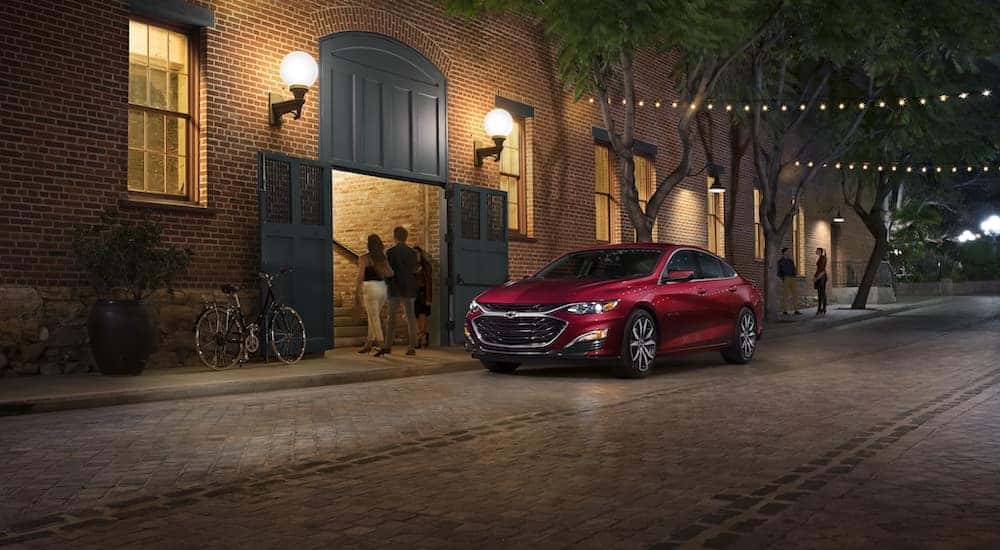
With so many great options for midsize sedans, how do you know which one to go with? What parameters do you use to determine which model and what trim grade is right for you? Is it capacity? Performance? Fuel economy? Design? Amenities? Or all of the above? Your options expand exponentially when shopping for a used model, as it opens up a wealth of different iterations and generations based on what you’re looking for.
If you haven’t already, you might consider shopping for a used Chevy Malibu for sale, and we have compelling reasons why. The following are five ways in which the Malibu tops some of its competitors in key categories, helping you consider why it might be smart to shop for one.
#1. More Capacity Than the Toyota Camry and Mazda6
Making the most use of a midsize sedan is important, and the different models in this segment have to choose what to focus on for features. Some are more focused on power and performance, others on fuel economy and range, while some are all about comfort and convenience. When it comes to capacity the Chevy Malibu manages to be one of few that stands out even over some of the most popular entries in the segment, offering more capacity than both the Toyota Camry and Mazda6.
The Camry has a max cargo capacity in its trunk of 15.1 cu.ft. of space, which is a good figure for a midsize sedan. The Mazda6 is far less charitable with its cargo capacity, only topping out at 14.7 cu.ft. While these vehicles are all in the same segment, you have more space with the Chevy Malibu by comparison.
Throughout the newer generations the Malibu achieved a max cargo volume of 15.7 cu.ft. in its trunk. That’s a moderate difference between the Malibu and the Camry, but it’s much more significant compared to the Mazda6, with just over 10% additional cargo capacity. If space is a key factor when deciding on a used midsize sedan, then it’s something to consider, given how close in price these three sedans are.
#2. Better Fuel Economy Than the VW Arteon
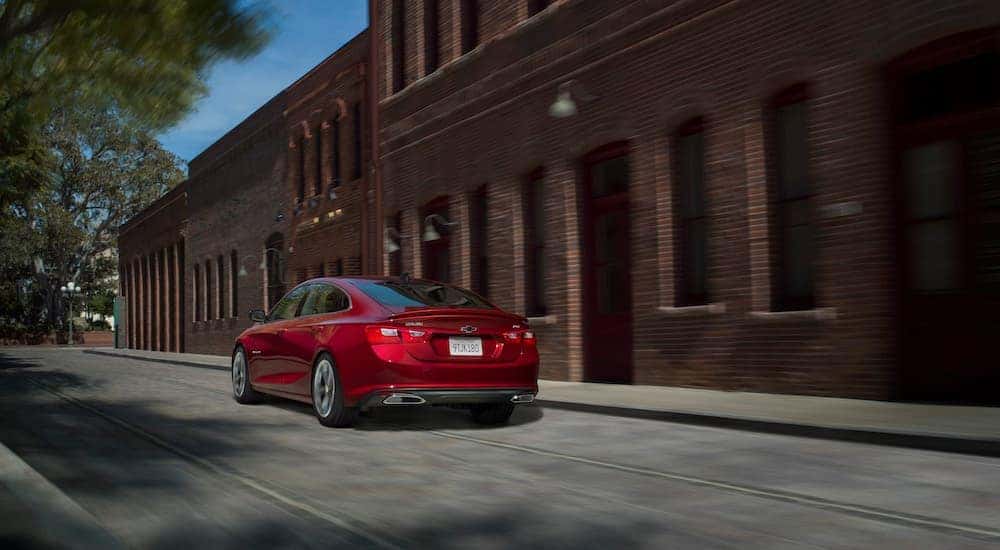
Fuel economy is so important when it comes to driving a sedan. If you’re into performance cars or luxury vehicles, the fuel economy may not be as important to you because it’s all about the style or how well the vehicle behaves. But when it comes to an economy-class sedan that you’re buying used, you’re likely going to want good fuel economy both in the city and on the highway, and the Malibu has one of the stronger turbocharged engines with great efficiency in its class.
The Malibu provides some good gains on the road and saves some serious cash at the pump, especially compared to some other midsize sedan rivals such as the VW Arteon. If you were looking for a midsize sedan, the Arteon might seem like a good choice from the outset, but if fuel economy was a deciding factor, then the Arteon comes up short compared to the Malibu. You can get VW’s midsize sedan in either front- or all-wheel drive. In all-wheel drive, it has a fuel economy of 22 MPG in the city and 31 MPG on the highway; in front-wheel drive, you have a fuel economy of 25 MPG in the city and 33 MPG on the highway.
The Chevy Malibu had two available powertrain configurations in the latest generation, up to the 2022 model year. The 2.0-liter turbocharged 4-cylinder offers more power and tops out at 22 MPG in the city and 33 MPG on the highway, but where the Malibu really shines is with its standard 1.5-liter turbocharged 4-cylinder, which delivers 29 MPG in the city and 36 MPG on the highway. This gives you much better fuel economy over the Arteon, which is something to consider if you’re looking for a sedan that’s affordable, roomy, and offers great gas mileage.
#3. More Safety Features Than the Kia K5
Safety is such an important factor when it comes to choosing the right kind of used vehicle. Obviously, the older the model year, the fewer advanced safety features you have access to. But that isn’t entirely true with the Chevy Malibu since every ninth-generation Malibu comes with the Chevy Safety Assist suite—a collection of safety tech far more comprehensive than you get with midsize sedans from other brands, including the highly celebrated Kia K5. While both sedans offer some great active and passive aids, there are a few safety features where the Malibu trumps the K5.
With the K5, you have some standard safety features, including automatic emergency braking, parking collision avoidance, lane departure warnings with lane-keeping assistance, and blind spot monitoring with cross-traffic alert. The Chevy Malibu manages to match these safety features with Chevy Safety Assist while also offering lane-centering assistance and lane departure warnings, along with pedestrian detection and automatic emergency braking. However, where the Malibu really shines is with its proprietary features like Teen Driver Mode.
A tool comparable to Teen Driver Mode is not available on the Kia K5, so if you were shopping for a used midsize sedan, you’re out of luck. It’s a useful feature because you can use it to track the progress and performance of your teen’s driving behaviors, including how often certain driving aids were used, how fast they were going, and how far they traveled. Plus, with features like Buckle-to-Drive, the Malibu requires teens to go through pre-driving safety checks before being able to access certain infotainment features, which makes it a great learning vehicle for your budding teen driver.
#4. More Cabin Volume Than the Nissan Altima
Cargo capacity in the trunk space is one thing, as you can easily cram whatever you can within that area, but you can’t take that same approach to passenger volume, as people tend to dislike being squished together like sardines—and that’s why passenger volume in a midsize sedan is so important. Thankfully, both the Chevy Malibu and the Nissan Altima have ample passenger volume within their segment; however, the Malibu offers slightly more room than the Altima.
The Altima’s more recent generations top out at 100.6 cu.ft. of passenger volume within the cabin. This translates into a total front headroom of 39.1 inches up front and 36.9 inches in the rear, as well as 43.8 inches of legroom in the front and 35.2 inches of legroom in the rear. By contrast, the Chevy Malibu offers a total passenger volume of 102.9 cu.ft., which translates into 39.1 inches of headroom in the front and 37.5 inches of headroom in the rear. You also have legroom of 41.5 inches up front and 38.1 inches of legroom in the rear.
While the differences between the Altima and Malibu when it comes to passenger volume are measured in inches, you’re still looking at greater overall space in the Malibu, especially when it comes to the rear area, where you have more headroom and legroom, which makes a big difference when you’re carpooling or have growing kids. Even with the minor differences, you’re still getting slightly more out of the Malibu if passenger volume is important to you.
#5. Better Trim-Wide Infotainment Than the VW Passat
Infotainment has become so ingrained into modern automobiles that it’s hard to think of buying a vehicle without a proper media suite. However, if you were shopping through used sedans and thought about opting for a used version of the now-discontinued VW Passat, you should know that the Passat has its infotainment split among its entry- and upper-level trims. So, if you buy a used Passat and opt for the base trim, you end up with a 6.3-inch touchscreen. If you opt for the upper-grade trims, you get the 8-inch touchscreen.
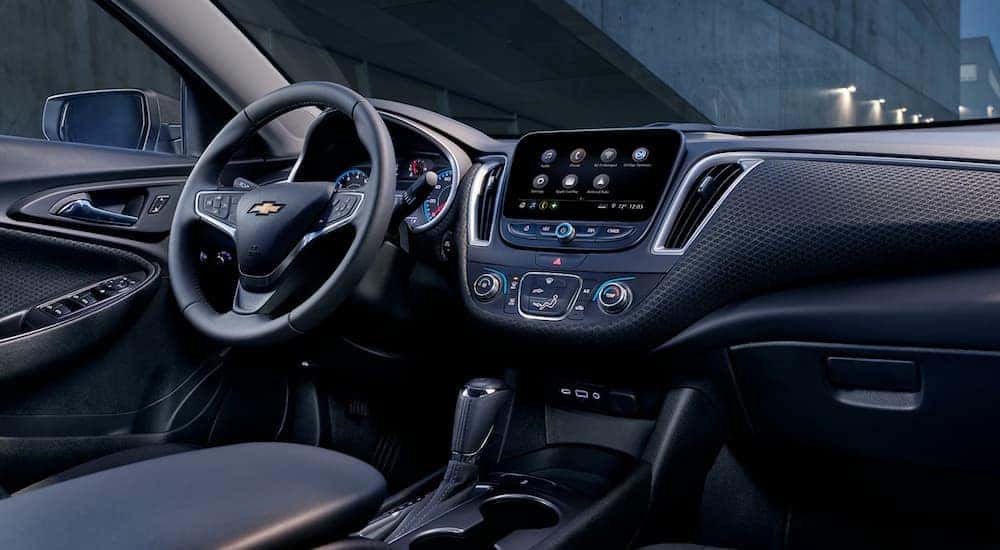
For the Chevy Malibu, you get an 8-inch touchscreen across the entire trim line. Whether you opt for an entry-level or upper-end trim, new or used, you always have an 8-inch touchscreen in your Malibu. Thus, if you’re looking for a used Chevy Malibu with a robust infotainment suite, you don’t have to worry about being limited to a smaller screen as you would when shopping for a used Passat. Yet another benefit of the Chevy Malibu!

0 comment(s) so far on 5 Significant Ways the Chevy Malibu Outdoes the Competition