



All You Need to Know About Charging the 2025 Blazer EV
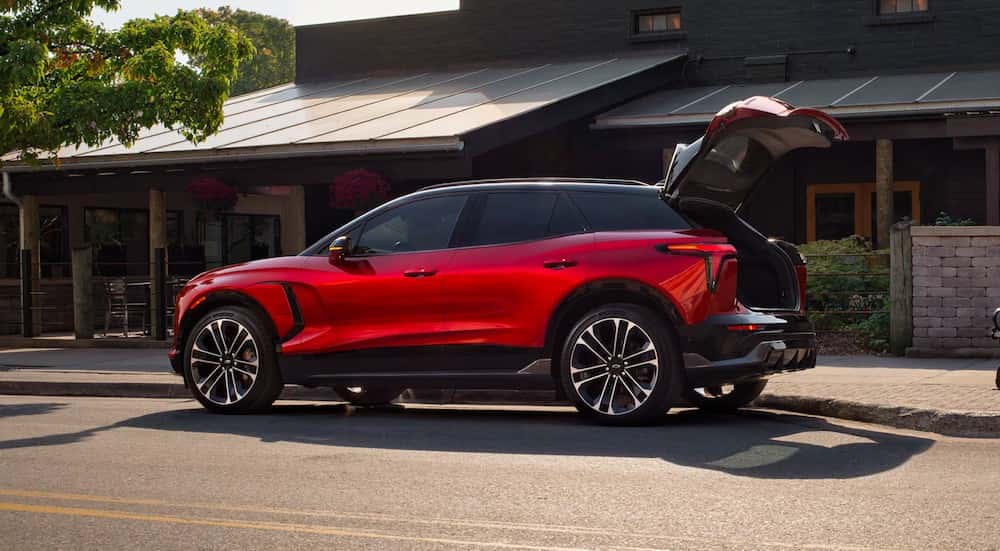
EVs are the future. It’s no longer the case that EVs are few and far between; they have become a mainstay of the industry, and it’s clear that many (if not most) people agree that the electrified driving experience is far superior to traditional gasoline. Just this year, we’re seeing a lot of people flocking to find a Chevy Blazer EV for sale in Cincinnati. There are, of course, several reasons for this: the style, the savings, the thrills, the quietness—and the list goes on.
But making the switch from an internal combustion engine to an electric powertrain can be intimidating, and there are often questions as to the practical components of EV ownership. How do I charge? How often do I charge? Is it better to charge at home or at a public station? These are the right questions to be asking, and we want to provide some answers for you as you consider making the change! For those of you considering the awesome Chevy Blazer EV, we thought we’d give you a look into what life might be like with this vibrant midsize electric SUV.
How Do EVs Work?
Let’s start with this question, as it lays the foundation for everything else. It’s actually the best question if you’re new to the concept, given that we’re conditioned to vehicles that operate with an internal combustion engine, so the idea of a vehicle not having an engine at all can be confusing, especially when you open the front hatch and don’t see an engine like you’re used to!
Instead of an engine, an EV has a large battery pack and motors. The Blazer EV, specifically, is built upon Chevy’s innovative Ultium Platform, crafting a dynamic electric floor for the vehicle. This provides power to the vehicle, allowing it to become mobile just like a traditional gas model would (except better, because a traditional gas model could never achieve the specs that the Blazer EV does).
Now, with the difference in powertrain comes a difference in power source. It’s no mystery, of course, that an engine burns fuel to operate while an electric powertrain requires an electrical charge just like any other electric device. So, while you’ll save a lot of money on gas, EVs do come with the logistical consideration of charging time. With that in mind, let’s dig into the Blazer EV’s charging situation, what you can expect, and how you can best utilize its battery economy.
How Do You Charge the Battery?
Charging is a pivotal part of EV ownership, and the technology around charging has gotten much stronger over the past few years, so it’s a good time to be considering an EV. In years past, getting a decent charge on your EV would typically require being plugged in and stationary for long periods. Furthermore, the Blazer EV offers more dynamic charging solutions than other EVs, so you’ll be able to spend less time charging!
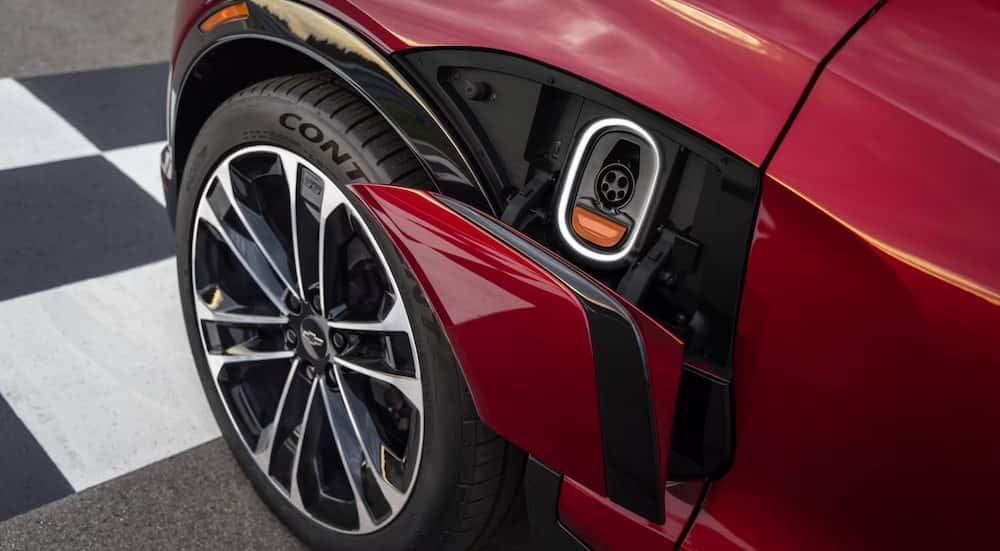
In order to charge your Blazer EV, you’ll use a port in the side of the vehicle where you’ll plug in a charging cord. (It will, essentially, look like there’s a gas pump feeding into your vehicle.) But not all charging methods are the same, so it’s important to know what your options are, as well as the pros and cons of each.
Public charging is becoming more and more common, with over 195,000 public charging stations available between the US and Canada. Public charging stations are a huge help as they allow you to charge on the go, which is very helpful on road trips and longer drives. However, public charging can sometimes feel like more of a time inconvenience as you’ll have to remain stationary with the vehicle for the duration of the charge. This used to be a bummer, but now with DC Fast Charging, you’ll be able to get in and out of the station in a fraction of the time!
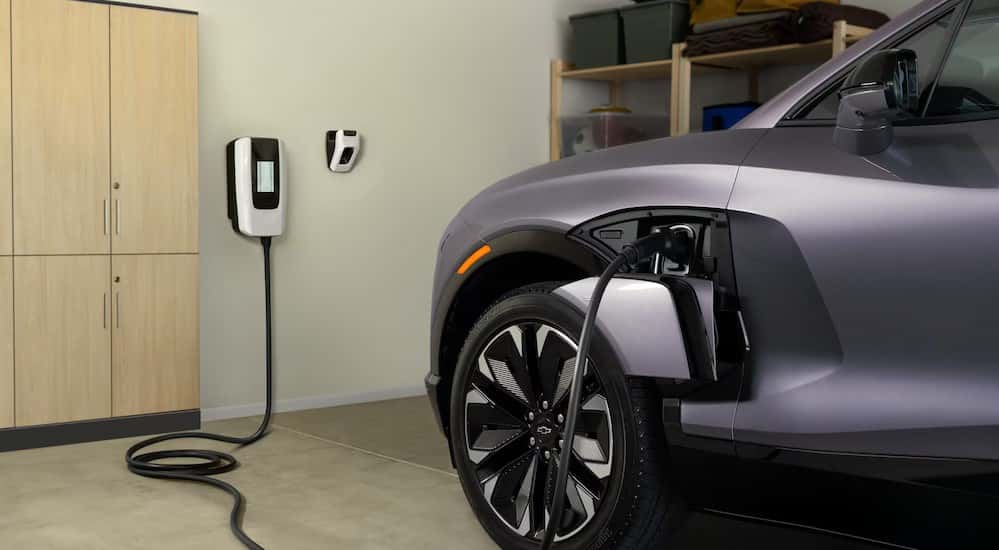
At-home charging is really the most convenient solution, not only saving time but also adding some extra benefits. In order to charge at home, you’ll need to have a charging unit installed, but this is an investment that will quickly pay itself off in dividends. Chevy offers an available dual-level charger, with two charging options at different power levels.
Level 1 charging (think “household outlet”) offers you 1-4 miles of range in one hour, making it perfect for “topping off,” as Chevy puts it. If you’re just trying to get back to equilibrium after your daily commute, plug in when you get home, select Level 1 charging, and you’ll be back up to full battery in no time. Level 2 charging (think “appliance outlet”), on the other hand, is perfect for when you need to recharge the whole battery overnight, as it’s capable of replenishing 7-40 miles of range per hour. Leaving it in while you sleep will have your battery in good shape by morning.
One of the more innovative solutions developed by GM is an available bidirectional charger, which not only charges your EV faster but can make your EV a source of power in itself. This charger takes power from your home, like usual, boosting the charging speed of the vehicle; with up to 32 miles of range per hour, you’ll have a fully-charged battery in no time. But, more excitingly, your home can take power from the Blazer EV. Let’s say there’s a power outage or blackout; you could be the one house in the neighborhood with lights on, as your Blazer EV can serve as a source of power to your home.
The Blazer EV is advancing the charging game, and we don’t think there’s ever been a better time to get an EV. But, even with this advanced charging, it may still be unclear exactly how often you’ll need to charge.
How Often Do I Need to Charge?
How often you need to charge depends on a variety of factors. The Blazer EV offers a range of up to 334 miles, which is quite good, especially for a midsize SUV. With that in mind, you can think of it kind of like stopping for gas: If you know that on any given week you’re only going to be using the vehicle for your daily commute, you don’t necessarily have to charge every day. However, once you’ve installed your home charging station, it’s advisable to at least top off using a Level 1 charger after a drive, even if it was just your commute.
This will prevent you from running out of battery or from spending time later at a public charging station. While public charging stations are becoming increasingly accessible, especially in urban areas like Cincinnati, there are far fewer of them than there are gas stations, and you may not be able to find one on any given street corner. At-home charging is certainly the way to go, and charging as often as possible will mean that you don’t have to give it a second thought!
Charging Up for Good Times
The Blazer EV is a hot commodity as a nicely designed, affordable, all-electric SUV, perfect for Cincinnati. While the idea of evolving to an EV can be intimidating, Chevy makes it easy with various advanced charging options (especially for its Blazer EV). Charging at home is a huge benefit, giving you loads of time back and still saving you money as opposed to a traditional gas model. Once the vehicle is charged, you’ll be able to enjoy those great performance specs and tech features to their fullest!

0 comment(s) so far on All You Need to Know About Charging the 2025 Blazer EV