



Coolant Leak Warning Signs: Causes, Solutions and Repair Tips
It’s important to keep your cool when you’re behind the wheel. While it’s frustrating to get abruptly cut off in traffic, caught in rush-hour gridlock, or stuck behind a driver who sees a turn signal as more of a suggestion, there’s nothing to be gained from becoming a little overheated.
The same goes for your vehicle, where rising temperature can wreak havoc on even the most well-maintained model. Your car’s coolant system is responsible for keeping everything within the ideal temperature range, but like any pressurized system, it’s prone to leaks and other issues. A coolant leak might start with a small puddle in your parking spot, but if you ignore the warning signs, you could be looking at a big-ticket repair and even more problems down the road.
Knowing what to look for, how to respond, and when to call in a professional are crucial to ensuring consistent performance and long-term safety. Let’s identify common signs of a coolant leak, how to trace it to the source, and learn how McCluskey Chevrolet’s in-house service center can help prevent things from getting too heated with our coolant leak repair services.
Common Signs of a Coolant Leak
Some automotive issues tend to fly under the radar, but a coolant leak is relatively easy to spot as long as you know what to look out for. These signs and symptoms range from the less obvious, such as small puddles and unusual smells, to clear indications like a check engine light, a dashboard temperature gauge firmly in the red, or even visible steam emerging from the hood. To help our customers protect their automotive investment, we’ve compiled a few common warning signs of a coolant leak. If you’ve experienced any of these issues or noticed a lack of consistency with engine temperature, it could be time to schedule a service appointment.
Puddles
If you’ve discovered a puddle of coolant beneath your vehicle, you could be dealing with a coolant leak. This coolant comes in many different colors, though the two most popular hues are green for Inorganic Acid Technology (IAT) products and orange/red/pink for extended-life Organic Acid Technology (OAT) formulas. Coolant isn’t the only fluid you’re likely to find pooling under your vehicle, but its distinctive color and consistency make it pretty easy to differentiate from other options. Engine oil, transmission fluid, and brake fluid are all a little more oily than coolant, which also has a distinctly sweet smell.
Sweet Odor
That sweet smell can also be one of the easiest ways to pinpoint a coolant leak. If you’ve started to notice a sweet, maple syrup-like odor when driving or shortly after turning off the engine, you might be facing a coolant leak. Depending on the leak’s location, the coolant can easily evaporate or drip onto hot components, creating this sweet smell.
Engine Overheating
An overheated engine can be a sign of a coolant leak, but it can also indicate other problems that may cause or contribute to the leak. A failing water pump, for example, can allow coolant to escape, while a blown head gasket can let coolant enter the combustion chamber and cause all sorts of downstream issues. With so many potential causes, it can be tough to pinpoint the problem when the temperature gauge starts to enter the danger zone. That’s why it’s so important to find the right partner in the repair and maintenance process, one who can quickly and effectively assess the situation and implement the right fix before a minor issue turns into a pricey project.
Coolant Level
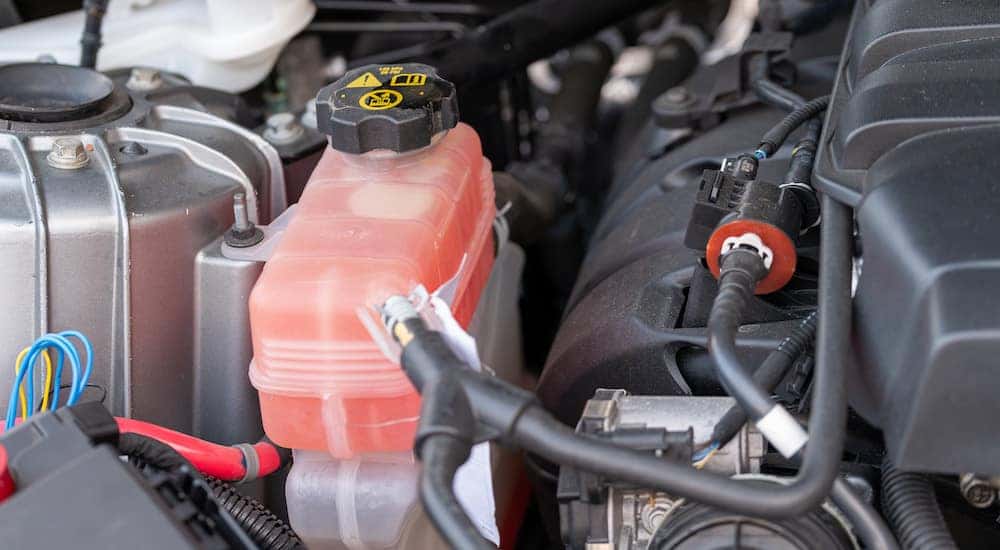
Every gas-powered vehicle is equipped with an overflow reservoir that allows drivers to quickly check the coolant level. These tanks are usually stamped with handy “minimum” and “maximum” indicators that show the ideal coolant level when the engine is cold and after it’s reached operating temperature. If this coolant level suddenly drops below the minimum when parked, or is lower than expected when the engine is running, you could be looking at a coolant leak. Also keep an eye out for any unusual bubbles in the coolant reservoir, as they could indicate a leak in the system.
Issues That Can Lead to a Leak
Radiator: After coolant has absorbed heat from the engine, it circulates through the radiator, where incoming air helps to lower the temperature. When the radiator is cracked, corroded, or otherwise damaged, it can allow coolant to escape.
Hoses and connections: The hoses and connections that cycle coolant through your vehicle are common points of failure, as cracks, worn seals, and loose connections can lead to leaks.
Water pump: Despite the name, the water pump circulates coolant, rather than water, through the cooling system. Worn seals, damaged components, and the ravages of time can cause this pump to fail, leading to a less-than-effective cooling system due to leaks and inconsistent pressure.
Coolant reservoir or radiator cap: Cracks or worn components can compromise the seal, leading to coolant loss.
Internal engine issues: Some problems run much deeper than a coolant hose or radiator cap. A blown head gasket allows coolant to enter the head and cylinders, which can lead to a large repair bill if not addressed quickly.
What to Do if You Suspect a Coolant Leak
What should a driver do when they suspect a coolant leak? Ultimately, it all depends on the severity of the issue. A small leak might not cause immediate symptoms, but that certainly doesn’t mean that it should be ignored. If you notice minor symptoms, such as a sweet smell after driving, a puddle of coolant in your driveway, or low coolant in the reservoir, it’s high time to arrange an inspection. These issues aren’t typically catastrophic, but should still be addressed as quickly as possible to prevent any long-term damage.
Then there are the signs indicating a clear, immediate issue that should be addressed immediately. If your engine temperature gauge starts to climb above the normal range, you notice a warning light, or see steam emerging from underneath the hood, you should pull over to the side of the road at the nearest opportunity and shut off the vehicle. An overheated engine can be caused by something as simple as a small coolant leak, but can lead to some serious and expensive repairs if immediate action isn’t taken.

Dos and Don’ts When Dealing With an Overheated Engine
Do:
- Immediately pull to the side of the road and shut off the engine.
- Let the engine cool completely before performing any visual checks.
- Look for common warning signs like puddles, residue around coolant hoses, or low coolant levels in the reservoir.
- Contact a roadside assistance service to arrange a tow.
Don’t
- Remove the radiator cap while the engine is still hot.
- Continue driving an overheating vehicle.
- Touch hot engine components or hoses.
- Add the wrong type of coolant to top off the tank.
Keep Your Cool at McCluskey Chevrolet
A coolant leak might start as a minor inconvenience, but ignore the warning signs and you could end up with overheating, engine damage, and a potentially pricey repair. If you notice any of the common signs of a coolant leak, such as puddles, low coolant levels, a steaming hood, or a sweet smell, it’s vital that you take the right precautions to protect your automotive investment.
Drivers will enjoy our service department’s professional support to get back on the road and back to their busy lives. From mobile service options that bring the full power of our service department right to your front door or office to our Free Lifetime Mechanical Warranty, we provide drivers with the protection, convenience, and competitive pricing they’ve been looking for. Stop in today and learn how we can provide the professional service you need when you’re dealing with a coolant leak.

0 comment(s) so far on Coolant Leak Warning Signs: Causes, Solutions and Repair Tips