



Gas vs Electric: Should You Choose the 2026 Blazer or the 2026 Blazer EV?
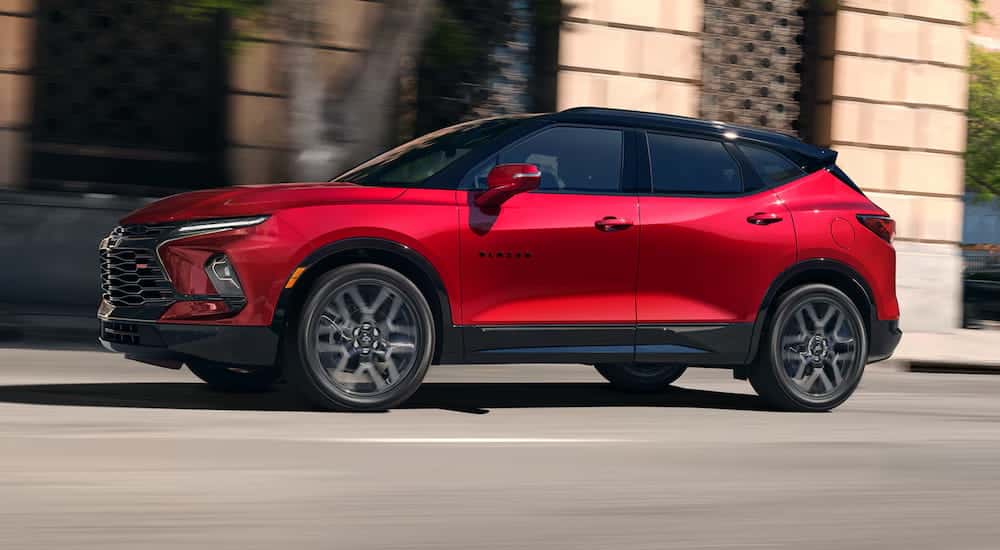
For decades, the Chevrolet Blazer has been an icon of American roadways. As we move further into the automotive future, that legacy has split into two distinct, incredible paths. Whether you are a traditionalist who loves the roar of an engine or a tech-enthusiast ready for the silent power of tomorrow, the 2026 Chevy Blazer duo has an answer for you.
The decision between the gas-powered Blazer and the all-electric Blazer EV is one of the most exciting dilemmas a car buyer can face today. Both models carry the “Blazer” nameplate, meaning both share a DNA rooted in Camaro-inspired design and driver-centric handling. However, beneath the metal, they are radically different machines designed for different types of drivers.
In this guide, we will break down the critical differences between these two SUVs to help you decide which one belongs in your driveway.
Under the Hood
The most fundamental difference between these two siblings lies in how they generate power. The traditional gas-powered 2026 Chevy Blazer offers a choice of engines, but the star of the show is the available 3.6L V6. This engine is a proven powerhouse, delivering a robust 308 hp and 270 lb-ft of torque. When you press the accelerator with this V6, you feel a satisfying build of power as the nine-speed automatic transmission shifts through the gears. It is a mechanical, visceral experience that many driving enthusiasts still prefer.
On the other side of the spectrum is the Blazer EV, built on GM’s revolutionary Ultium battery platform. Electric motors function differently from internal combustion engines because they do not need to “rev up” to produce power. The moment your foot touches the pedal, you have access to 100% of the available torque. In the high-performance SS trim, this translates to a GM-estimated zero-to-60-mph time of under four seconds when utilizing a mode called “Wide Open Watts” (WOW).
While the gas Blazer relies on mechanical gearing to find the right power band, the Blazer EV offers a seamless, uninterrupted surge of acceleration. This is often described as “instant torque,” making merging onto the highway effortless. However, the gas Blazer counters with a higher towing capacity of up to 4,500 lbs when properly equipped. If you plan on hauling a boat or a heavy camper across Ohio, the traditional V6 torque and cooling systems are still the superior choice for heavy lifting.
Driving Dynamics
Driving the gas-powered Blazer feels sporty and planted, much like the muscle car that inspired its design. The suspension is tuned for a balance of comfort and agility, making it one of the most fun-to-drive crossovers in its segment. You feel connected to the road through the steering wheel, and the engine’s feedback lets you gauge your speed by sound alone. It is a classic driving experience that feels natural to anyone who has driven a Chevy in the last twenty years.
The Blazer EV introduces a completely new way to interact with the road through One-Pedal Driving. This system uses electric motors to slow the vehicle down when you lift your foot off the accelerator, capturing that energy and sending it back into the battery. Over time, many EV drivers find they rarely need to touch the brake pedal in stop-and-go traffic. It significantly simplifies city driving, reducing foot fatigue during rush hour.
Furthermore, the Blazer EV’s center of gravity is significantly lower than that of the gas model. Because the heavy Ultium battery pack is mounted flat along the floor of the chassis, the EV hugs the road tightly around corners. This reduces body roll and makes the vehicle feel incredibly stable, despite being heavier than its gas counterpart. If you prefer a driving style that feels like a traditional SUV, the gas Blazer is your winner; if you want a gliding, futuristic ride, the Blazer EV takes the crown.
Command Center
Interior technology is where the divergence between these two models becomes visually obvious immediately upon entering the cabin. The gas-powered 2026 Blazer features a Chevrolet Infotainment 3 Plus system with a 10.2-inch touchscreen. This screen is large, responsive, and perfectly integrated into the dashboard design. It supports wireless Apple CarPlay and Android Auto, keeping your maps and media always at your fingertips without cords.
The Blazer EV boasts a massive, standard 17.7-inch touchscreen that dominates the dashboard. This screen is not just bigger; it is the nerve center of the entire vehicle, running on Google built-in technology. This allows for seamless integration of Google Maps, Google Assistant, and the Google Play Store directly into the car’s operating system.
One of the coolest features of the EV’s tech suite is the specialized navigation planning. Because the car knows it is electric, Google Maps will automatically plan long routes to include charging stops if necessary, telling you exactly how much battery you will have upon arrival. The gas Blazer doesn’t need this level of route integration because gas stations are ubiquitous. For tech lovers who want their car to feel like a rolling smartphone, the 17.7-inch screen in the Blazer EV is a game-changer, making the 10.2-inch screen feel modest by comparison.
Exterior Styling
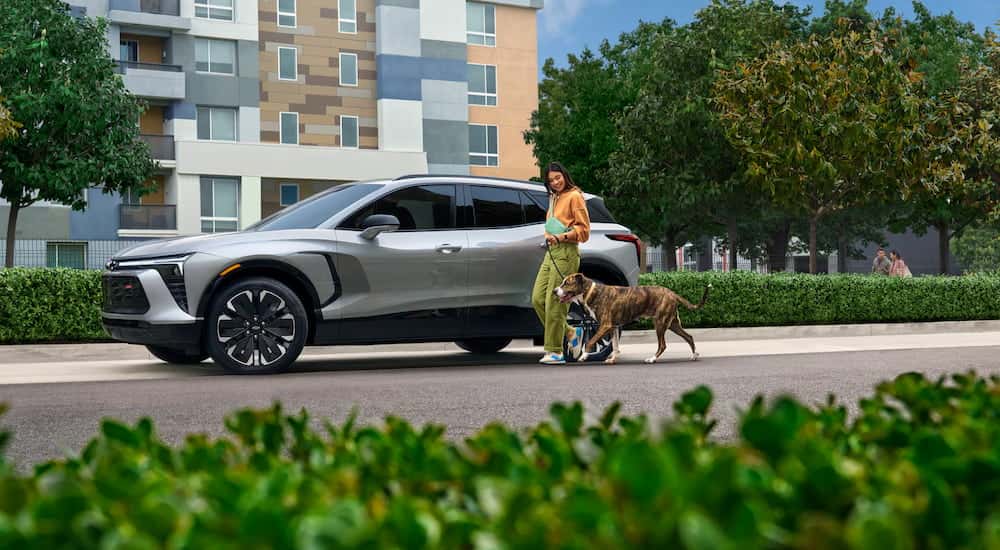
Chevrolet’s designers did an excellent job ensuring that both vehicles look like a Blazer, but they achieved this through different styling cues. The gas Blazer is defined by its large, aggressive grille, which is necessary to feed air to the radiator and engine. It boasts sharp lines, a sculpted hood, and a muscular look that commands attention and fits perfectly with the RS trim’s aesthetics.
The Blazer EV has a smoother, more aerodynamic front end. In place of the open grille, the EV often sports a stylish body-colored or black panel. The lighting signature is also more advanced here, with available choreographed lighting animations that greet you as you approach with your key fob. The front light bar on the RS and SS trims connects the headlights, giving the vehicle a broad, futuristic appearance at night.
Wheel options also differ between the two, with the Blazer EV offering massive wheels up to 22 inches on the SS trim to support its performance capabilities. The gas Blazer offers stylish wheels as well, but they are generally designed more for ride comfort and all-season durability. If you want a car that looks like a traditional performance SUV, stick with the gas model.
Interior Space
You might assume that the electric version, with its lack of a bulky engine, would have significantly more cargo space, but the numbers tell a nuanced story. The gas-powered Blazer actually offers slightly more maximum cargo volume, checking in at roughly 64.2 cu.ft. with the rear seats folded down. The roofline of the gas model is slightly higher, and the floor is lower in certain areas because it doesn’t need to accommodate a battery pack beneath it.
The Blazer EV offers a maximum cargo space of 59.1 cu.ft. While this is slightly less on paper, the floor of the EV is completely flat, which can make loading long or wide items easier. Additionally, the EV’s cabin feels more spacious for passengers. Without a transmission tunnel running down the center of the car, the EV offers generous legroom and storage options between the front seats that the gas model cannot match.
If your primary use for an SUV is maximizing every square inch of vertical storage for tall boxes or furniture, the gas Blazer wins by a narrow margin. However, for passenger comfort, the Blazer EV utilizes its longer wheelbase to provide a limousine-like experience for rear-seat passengers. It comfortably seats five adults, with plenty of legroom even for taller passengers.
Ownership Costs
The “sticker price” is only one part of the financial equation when buying a new car. The gas Blazer generally has a lower starting MSRP compared to the Blazer EV. If you are looking to keep your initial monthly payment as low as possible, the gas model’s LT trims offer a more accessible entry point. They are proven, affordable outfits that deliver high value.
However, the Blazer EV fights back with lower long-term operating costs. An electric vehicle has significantly fewer moving parts than a gas engine. There are no oil changes, no transmission fluid flushes, no spark plugs, and no timing belts to replace. Brake pads also last significantly longer on an EV due to the regenerative braking system doing most of the work.
Over five years of ownership, savings on fuel and maintenance can bridge the gap in the upfront price, even though today’s lowest-priced Blazer EV costs more than the highest-priced gas Blazer.
Which 2026 Blazer Better Fits Your Life?
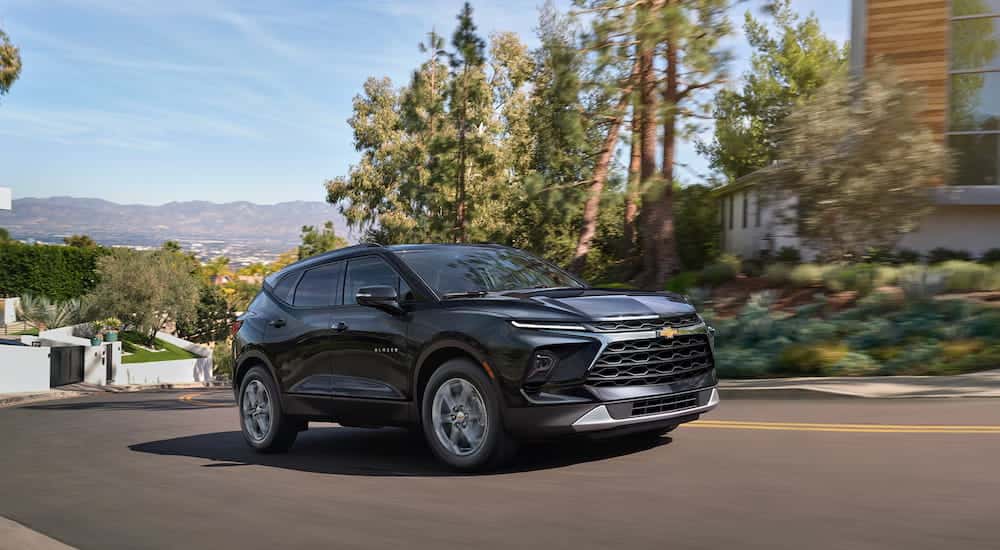
Ultimately, there is no wrong choice here—only the choice that best fits your specific needs. The gas-powered 2026 Chevy Blazer remains a champion of versatility, offering long-range freedom, towing capability, and a lower upfront cost. It is the perfect choice for the driver who wants a sporty, reliable SUV without changing their daily refueling habits.
The 2026 Chevy Blazer EV is for the driver ready to embrace the all-electric future. It offers superior technology, exhilarating instant performance, and the convenience of home charging. It transforms the daily commute from a chore into a high-tech experience.
The best way to decide is to feel the difference for yourself. Test-drive the gas-powered Blazer and get a feel for the V6 engine, then hop into the Blazer EV and experience the silent rush of instant torque. Only then will you know which 2026 Blazer model belongs in your garage.

0 comment(s) so far on Gas vs Electric: Should You Choose the 2026 Blazer or the 2026 Blazer EV?