



Get a Grip: Understanding All-Terrain Tires
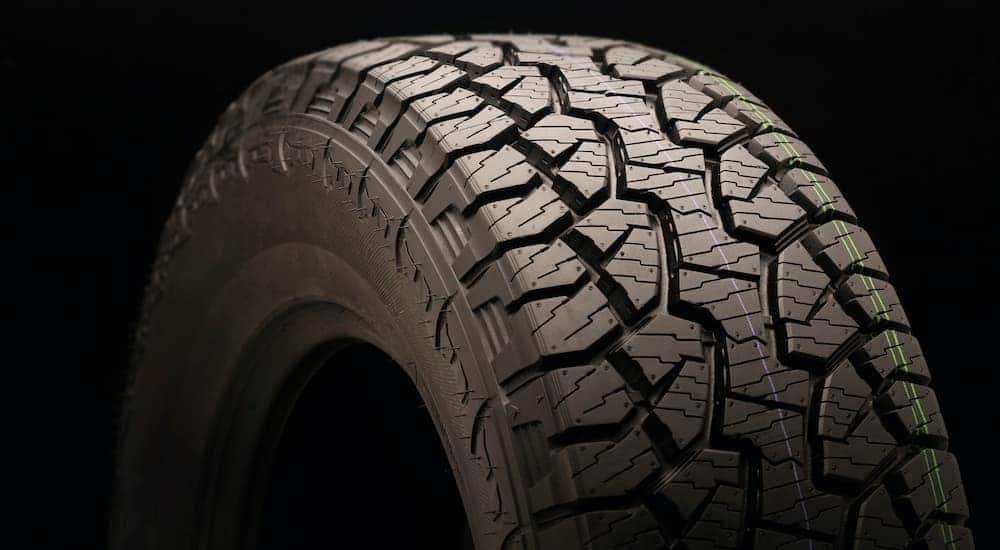
Forget the engine, shocks, skid plates, and lift kits: if you’re looking to do some serious off-roading, start with the tires. While tires might not be the most exciting component on your off-road rig, good traction can be the difference between a successful off-road adventure and a frustratingly short-lived outing that leaves you spinning your wheels and cursing the auto gods. Historically all-terrain tires have been reserved for vehicles that spend more than half their time navigating off-road conditions, but all-terrain (A/T) tires aren’t solely reserved for the 4×4 set. This raises the question: exactly what driving conditions are all-terrain tires good for, and where can you get a pair of all-terrain tires in Cincinnati?
While they are an ideal choice for any off-road exploits, all-terrain tires are actually a good fit for a wide variety of driving conditions. From dry, paved roads to slick, snowy streets, mud, gravel, and everything in-between, today’s all-terrain tires offer many advantages over their all-season counterparts. As for where to buy them in Cincinnati, you don’t have to look any further than McCluskey Chevrolet.
What Are All-Terrain Tires?
Typically found on trucks and SUVs, all-terrain tires provide a flexible middle ground between all-season tires and off-road tires. All-terrain tires offer a number of advantages over these other designs owing to their construction and flexibility. For example, the tire’s open-tread design drastically improves traction on loose surfaces with a network of interlocking treads that are perfect for gripping rocks, mud, and paved roads alike. All-terrain tires also feature reinforced sidewalls which improve the vehicle’s overall load-carrying capacity, making them a particularly good fit for drivers who often find themselves navigating off-road conditions while hauling heavy loads.
Choosing the right set of tires is about more than just comfort and responsiveness; it can also save you money. This is especially true of all-terrain tires, which, owing to their fusion of both on and off-road characteristics, work almost as well on snowy and icy surfaces. Some drivers with all-terrain tires might be able to forego the seasonal switch between summer and winter tires, saving money without sacrificing safety, though it should be noted that many all-terrain tires don’t feature the same tread patterns and rubber compounds that make winter tires so effective in moderate to deep snow.
Of course, there are some drawbacks to using all-terrain tires as your everyday skids. First off, they’re generally going to be noisier than the competition due to their rigid construction and wider tread. The tire’s softer rubber compounds also mean they wear away a little quicker than average, though the difference isn’t nearly as drastic as one might think.
All-terrain tires are more prone to cupping – developing worn-out spots or divots around the circumference of the tire – due to their design, especially if they’re not being properly rotated. Given the sort of off-road abuse they’re put through, it’s a good idea to inspect and maintain all-terrain tires a little more often than you might with regular tires, and this includes rotating the tires every 6,000 to 8,000 miles. And, as always, there’s the traction vs efficiency trade-off. Tires that offer better traction are, in general, going to take a toll on fuel efficiency and vice versa, but then, no one ever got into off-roading as a way to save money.
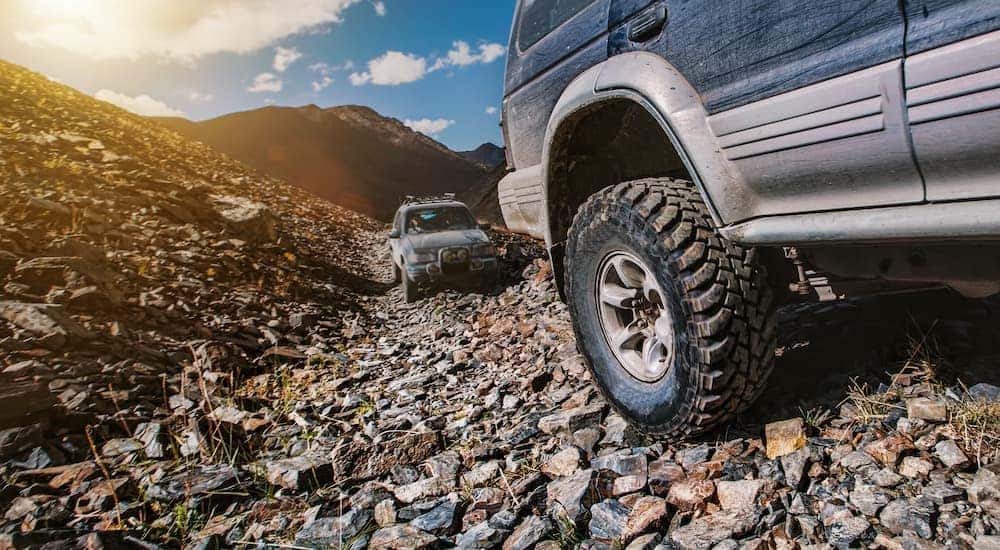
What Conditions Are All-Terrain Tires Good For?
Regular Roads – While they’re designed to switch between on and off-road applications, A/T tires still perform admirably on paved surfaces. Sure, they’re going to be a little less responsive and slightly increase the time it takes to turn and brake, but they’re also more forgiving. The softer construction of A/T tires means they’re better at resisting impacts, resulting in fewer cuts or tears that can send you back to the tire shop.
There’s also a slight sacrifice when it comes to fuel economy, as the softer, grippier tires aren’t the most efficient design around. Most drivers facing primarily paved roads are going to opt for all-season tires, which offer improved handling and braking than A/T tires while also providing a smoother ride. All-season tires also feature better handling on wet surfaces when moving in a straight line, as well as better fuel efficiency.
Mud – If you’re building an off-road specific rig, you might be tempted to go with out-and-out mud tires, but how do these stack up against the A/T option? Mud tires feature more space between tread blocks allowing them to effortlessly crunch through terrain that might leave lesser tires spinning. They’re also designed to let mud flow easily from in-between the treads and are, in a sense, self-cleaning.
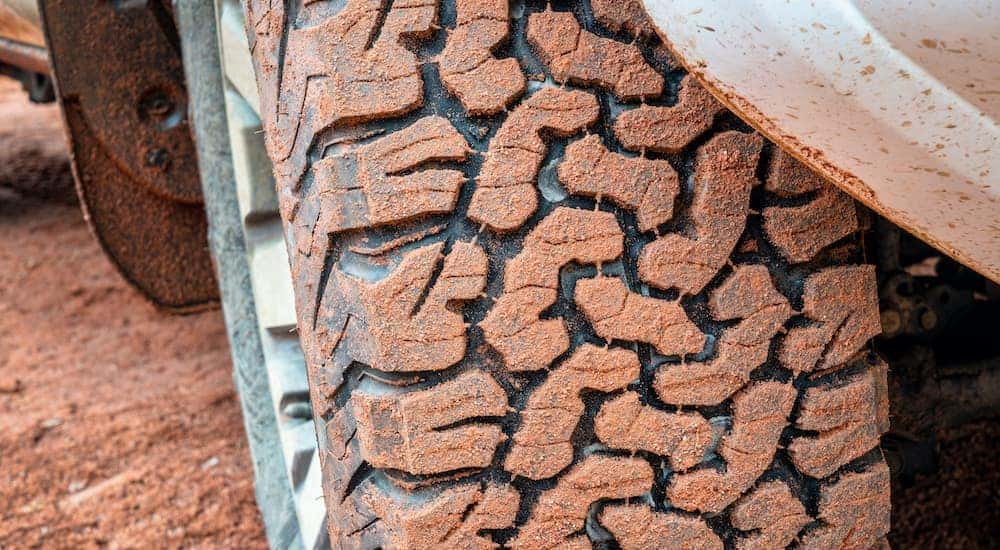
A/T tires, on the other hand, have a tendency to get gunked up when faced with an excess of mud, reducing traction and potentially requiring some mid-ride cleaning. That’s not to say they don’t have some advantages over mud tires. A/Ts are quieter, more efficient, and their sipes – the small slits in the tread – are better at digging into sandy surfaces. The real advantage, however, lies in their versatility. Mud tires are great for a very specific task but fail to perform nearly as well when the mud dries up. A/T tires offer more flexibility, saving you from the arduous task of switching out tires as mudding season comes to an end.
Snow/Ice – For drivers in areas that experience milder winters with sparse snowfall, A/T tires stack up quite well against their winter-specific counterparts. A/T tires feature a similar type of tread as winter tires, offer good grip and stopping distance, and most importantly, don’t need to be changed out when the seasons start to shift. That’s not to say that they’re perfect for every type of winter driving, especially in colder climates. Winter tires use a different type of rubber compound in their construction that is designed with a specific temperature range in mind. In fact, at temperatures below 43 degrees, these compounds may stiffen up too much to offer adequate control and safety.
Sand – For those who prefer to off-road in drier climates, sand can present some real challenges. All-season tires that are too narrow or feature too aggressive of a tread pattern tend to dig into the sand instead of riding on top of it, slowing you down and making it all-too-easy to get stuck. While it’s always fun to have an excuse to break out the winch, consider investing in some A/T tires first. The lighter tread design hits the sweet spot between grip and float, allowing you to sit higher in the sand and not spend all day spinning your wheels. Releasing some air pressure will also expand the tire’s footprint, giving you even more surface area and making for easier off-roading in sandy conditions. Sure, they make sand-specific tires for this exact purpose, but much like the mud tires, why invest in multiple sets when A/T tires can handle the job?
Is It Time to Switch to All-Terrain Tires?
Are you looking for a new set of all-terrain tires to take your off-roading to the next level? The team at McCluskey Chevrolet is here to help. Drivers throughout greater Cincinnati have come to trust McCluskey Chevrolet as the area’s one-stop-shop for all things Chevy, but that hardly scratches the surface. In addition to our wide selection of new and used vehicles from Chevy and a number of other leading brands, we also offer an in-house tire shop. Our trained technicians will help you select the perfect tires to truly unlock your vehicle’s potential with many top brands to choose from.
In addition to our tire shop, we offer a full service center staffed with certified service experts who are here to ensure your vehicle runs just as well as it did the day it left the dealership. From brake jobs and tire rotations to multi-point vehicle inspections, oil changes, and more, we strive to offer the highest possible level of service here at McCluskey Chevrolet. Call or stop by today to browse for new tires, schedule service, or simply do a little window shopping for your next dream car.

0 comment(s) so far on Get a Grip: Understanding All-Terrain Tires