



How the 2026 Chevy Traverse Outclasses the 2026 Ford Explorer
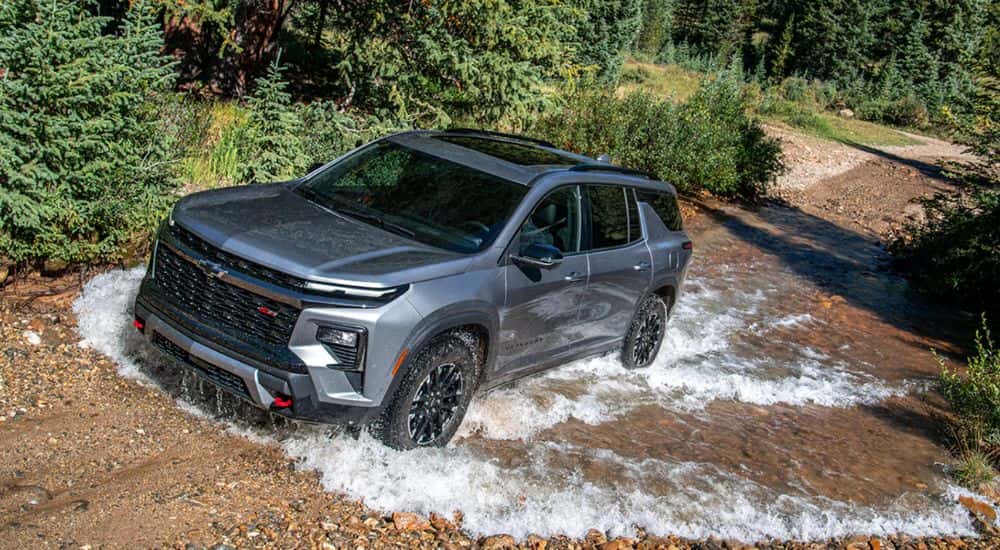
Three-row midsize SUVs continue to grow in popularity thanks to their combination of passenger capacity, high-end versatility, and balanced efficiency. They are ideal for growing families who need a little extra space, urban commuters who want the flexible cargo capacity of an SUV with car-like efficiency, and fleets that need a utility vehicle ideal for a variety of roles.
Both Chevy and Ford have leaned into the segment, and both have highly regarded three-row midsize options in the Traverse and Explorer, respectively. But in the 2026 Chevy Traverse vs 2026 Ford Explorer face-off, the Traverse is the clear winner for drivers who prioritize interior space and comfort, incredible standard power, and advanced infotainment technology.
Under the Hood
Some midsize SUVs sacrifice performance for capacity, with sluggish powertrains that deliver solid but unimpressive performance. Both the 2026 Traverse and 2026 Explorer come with reliable, proven powertrains that deliver stellar performance, though the Traverse has a more powerful standard engine, making it an incredible value.
Powertrains
The powertrains of both the Traverse and Explorer are oriented toward practical utility, but they use modern turbo technology to extract performance from a small but efficient four-cylinder engine.
The 2026 Traverse focuses on simplicity and reliability, providing ideal performance under a variety of driving conditions and uses. Beneath the hood of all Traverse trim levels, there is a 2.5-liter turbocharged inline-four paired with an eight-speed electronically controlled automatic transmission. While the standard equipment includes a front-wheel drivetrain, all-wheel drive is an option on most trim levels.
The standard engine in the 2026 Explorer is a slightly smaller 2.3-liter EcoBoost turbocharged inline-four mated to a 10-speed automatic transmission. The Explorer does offer a second engine option in select upper trims: a 3.0-liter EcoBoost twin-turbo V6. Both powertrain options use standard rear-wheel drive; however, as in the case of the Traverse, an all-wheel drivetrain is available.
Performance
When it comes to output from the standard powertrain, the Traverse wins hands down. Chevy’s 2.5-liter turbo produces 328 horsepower and 326 lb-ft of torque, which significantly exceeds the Explorer’s output with its base engine, which produces a mere 300 horsepower and 310 lb-ft of torque.
This difference in production gives the Traverse a more dynamic driving experience, with sharper acceleration, better top-end performance, and easy driveability under a variety of driving conditions. Both the 2026 Traverse and 2026 Explorer boast a 5,000-lb maximum towing capacity with their base powertrain, extending the practical utility of each SUV.
Interior Space
While both the Traverse and Explorer are classified as three-row midsize SUVs, the Traverse offers more with its design, providing greater passenger and cargo capacity in its spacious, well-appointed cabin.

Passenger Room
Both SUVs offer three rows of seating, and each also has optional second-row captain’s chairs in some trim levels. However, that’s where the similarities end when it comes to passenger capacity and comfort, as the Chevy Traverse is better suited for moving its occupants in comfort and style.
The 2026 Traverse is the larger SUV, both inside and out, with an overall length of 204.5 inches and a wheelbase of 121 inches, compared to the 2026 Explorer’s 198.8-inch overall length and 119.1-inch wheelbase. The Traverse’s size compares favorably with the Explorer’s for drivers who want a bigger, roomier SUV, translating into a more spacious cabin and increased comfort for the Traverse’s occupants.
The stated capacity of the Explorer is seven adults in the standard configuration or six adults with the optional captain’s chairs in the second row. With its best-in-class cabin occupancy, the Traverse can carry one more adult than the Explorer, with a standard capacity of eight passengers or seven passengers with captain’s chairs in the second row.
Across all three rows of seating, the 2026 Traverse provides superior headroom and legroom. The difference is especially evident in the Traverse’s front seat measurements. Its headroom and legroom numbers are 42.6 inches and 44.3 inches, respectively, which exceed the Explorer’s 40.7 inches of headroom and 43 inches of legroom.
Even small differences in headroom and legroom measurements can significantly improve comfort for passengers on long road trips or in congested urban traffic.
Cargo Capacity
When it comes to cargo capacity, the 2026 Traverse once again outshines the 2026 Explorer thanks to its larger overall size and interior volume, offering more dedicated cargo space and greater overall payload capacity in any configuration.
The Traverse offers best-in-class overall cargo capacity, giving drivers 22.9 cubic feet of dedicated cargo volume behind the rear seat, which bests the Explorer’s 16.3 cubic feet. That difference is further magnified when the rear row is folded down, as the Traverse offers 56.6 cubic feet of volume to the Explorer’s mere 46 cubic feet.
With both rear rows stowed, the Traverse has an incredible maximum cargo volume of 97.6 cubic feet, surpassing the Explorer’s 85.8 cubic feet of cargo volume by nearly 12 cubic feet. That’s enough bonus space for two extra full-size suitcases or four standard-sized moving boxes, giving the 2026 Traverse the nod in cargo-carrying capability and practical utility.
Technology
Modern drivers look for top-tier technology when selecting their next vehicle, and both the Traverse and Explorer offer software and systems that provide excellent connectivity and engagement. However, the 2026 Traverse offers more standard infotainment features than the 2026 Explorer, and its Super Cruise tool gives it an edge in available driver assistance features.
Infotainment Suite
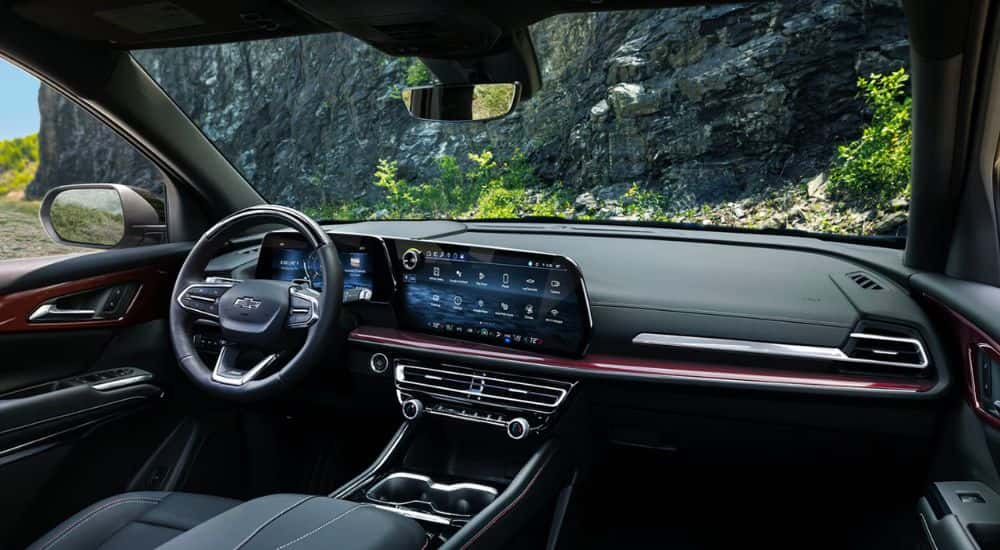
The 2026 Traverse offers superior screens across all trim levels, with a standard 17.7-inch infotainment touchscreen that keeps “menu-diving” to a minimum by displaying several key functions at once. Unlike other proprietary infotainment platforms, the Traverse incorporates Google built-in, so drivers can employ a wide range of Google-based apps for instant familiarity and seamless connectivity.
The 2026 Explorer’s standard 13.2-inch touchscreen runs the Blue Oval’s exclusive SYNC software, and Ford adds a second 12.3-inch digital instrument cluster to provide drivers with critical information.
Both SUVs offer standard tech perks like wireless Android Auto and Apple CarPlay for seamless access, as well as a Wi-Fi hotspot and wireless device charging. While each SUV comes with a standard six-speaker sound system, the Traverse offers an optional 12-speaker Bose audio system, while the Explorer’s alternative is a lesser 10-speaker Bang & Olufsen setup.
Driver Assistance
Both the 2026 Traverse and 2026 Explorer offer drivers top-tier standard driver assistance and safety features, and both vehicles earned a Five-Star Overall Safety Rating from the National Highway Traffic Safety Administration.
The Traverse incorporates the Chevy Safety Assist suite of driver assistance features, which includes Blind Zone Steering Assist, Automatic Emergency Braking, and Forward Collision Alert. The Explorer’s Co-Pilot360 suite offers similar features that notify drivers of developing hazards and help them avoid collisions.
The 2026 Traverse distinguishes itself by offering outstanding hands-free driving through its Super Cruise tool. Super Cruise is widely considered superior to Ford’s BlueCruise tool because it’s compatible with hundreds of thousands of miles of highways nationwide. Though Ford offers BlueCruise as standard across a wider range of trim levels, its compatibility is more limited to prequalified sections of highway.
Super Cruise also uses highly precise LiDAR mapping technology, compared to the less accurate radar and camera hardware used by BlueCruise. Super Cruise also incorporates a more intuitive interface in the form of a steering wheel-mounted light bar, while BlueCruise relies on less visible instrument cluster icons.
The Traverse Bests the Explorer in Capacity, Comfort, and Tech
Though the 2026 Traverse and 2026 Explorer are both quality three-row midsize SUVs, the latest Traverse offers better comfort, capacity, and technology, making it ideal for a wide range of roles and lifestyles. The comparable price point and better standard powertrain and tech in the Traverse provide drivers with more bang for their SUV-buying buck, giving the Chevy a distinct edge in overall value.
Whether you need a comfortable shuttle for highway getaways, an efficient and versatile commute partner, or a service SUV that is ideally suited for almost any job, the 2026 Chevy Traverse beats the 2026 Ford Explorer in ways that matter most to SUV drivers.

0 comment(s) so far on How the 2026 Chevy Traverse Outclasses the 2026 Ford Explorer