



Low Engine Oil? Here’s What You Need to Know

You may not pay much attention to your vehicle’s oil until it’s time to bring it in for a routine oil change. However, it’s important to monitor your oil’s condition at all times so your car performs optimally, safely, and reliably.
You may not want to wait for routine maintenance to address your oil’s condition, especially if you notice your vehicle acting strangely. So, how often should you check your car’s oil, and what should you do if it is low? Let the experts at McCluskey Chevrolet bring you up to speed on all things oil.
How Often Should You Check Your Oil?
Although many vehicles today can go 10,000 miles or more without an oil change, it’s not recommended to wait that long to check your oil to ensure it’s still doing its job properly.
Experts recommend checking your oil about once a month to ensure it’s still in good condition and at the right level. This can be done by popping open the hood, removing the dipstick, and checking that the oil level is between the upper and lower markings on the dipstick. In a perfect world, you want it closer to the FULL line, but anything in between is still adequate.
You also want to use a towel to wipe the oil off the dipstick to check its color and consistency. Your oil has a tough job to do, lubricating the many moving parts of your engine. To do this properly, it needs to be light to golden brown in color, smooth in texture, and not gunked up. If it’s dark brown or black and gritty, it’s time for an oil change.
How Do You Respond to Low Oil?
If you notice that your oil levels are nearing the lower limit or, worse, below it, address this as soon as possible. Continuing to drive your vehicle with low oil can cause serious (and sometimes irreversible) damage to your engine, which we’ll get into a little more later.
You’ll want to take care of this promptly, either by yourself or by taking it to a reputable service center, which is highly advised. In the latter manner, a certified team can take a look at your car, diagnose the cause of your low oil level, and ensure that it hasn’t already caused damage to your vehicle.
You’ll want to ensure that, if you are taking care of this yourself, you use the right type of oil and that you let your engine cool down before you start filling it up. Take your time doing this so that you don’t overfill your oil. In many cars, if your oil is low, a light on your dashboard will illuminate. If this is the case for you, wait until the light turns off before resuming your drive.
Reasons for Low Oil Levels
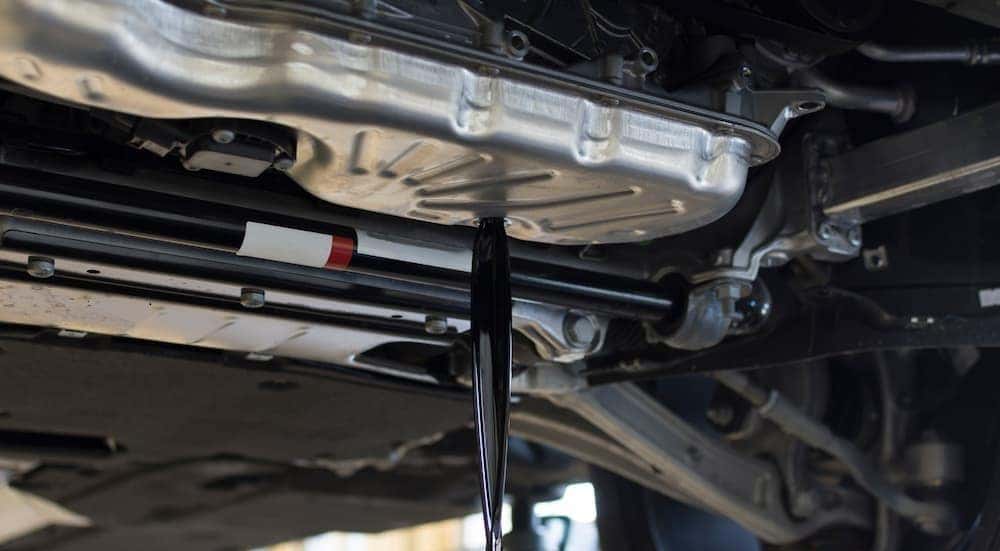
There are a few reasons your oil may be low, and a leak is one of the usual culprits. Wear and tear can affect virtually every part of your vehicle, and your oil pan is no exception. There may also be leaks in the filter, seals, and other parts surrounding where your oil is stored, so it’s important to have this checked out if you notice your oil is low, even if you’ve already refilled it.
You may also be waiting too long between oil changes, and if you find yourself clocking more miles on the interstate or through challenging terrain, you may need to change your oil more frequently. It’s imperative to use the proper oil viscosity as well, because using the wrong type of oil viscosity (one that is too thick or too thin) can cause issues.
The Consequences of Low Oil
Your car’s engine needs oil to lubricate its moving parts so that they can move freely and your engine can operate at its peak. If there’s not enough lubrication, friction builds up, causing your engine to work harder and, in severe cases, leading to complete engine failure, which means a whole new engine is needed. This is not cheap and can be avoided simply by knowing what’s going on with your oil and checking its consistency and levels regularly.
Low engine oil also reduces overall performance, so if you notice your ride quality isn’t the same as it used to be or you’re making more trips to the gas station, something may be up with your oil. Low oil is not something to be taken lightly; it absolutely needs to be addressed right away, because the last thing you want is excessive wear and tear on an important part of your vehicle, like the engine.
Warning Signs to Watch Out For
In addition to performance and efficiency changes, there are plenty of signs that your car’s oil levels are not quite right. Any grinding or knocking sounds coming from your engine need to be looked at immediately, as they could signal that your engine isn’t working as it should.
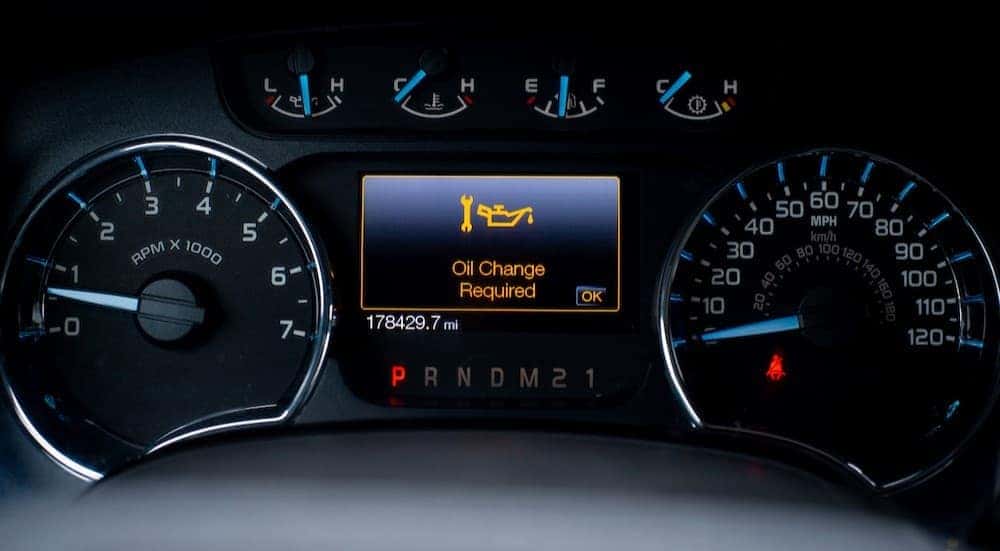
You may also notice that your vehicle is overheating, which is never a good sign, and that the engine may be overworking due to insufficient lubrication. Of course, one of the first signs many drivers can’t help but notice is a light on the dashboard that signals something may be amiss beneath your vehicle’s hood.
Another sign that your oil may not be filled adequately is excessive exhaust smoke. If you notice white or bluish smoke coming from your exhaust, it is a strong indicator that oil is burning and that your vehicle needs to be checked out right away. Don’t wait until you break down to address these issues; they’re easy to fix and can avoid big problems down the road.
Why Routine Oil Checks Are Important
The last thing you want is a costly repair to your vehicle or to be driving an unsafe, unreliable car. You don’t want to find yourself stranded on the side of the interstate, and the good news is that you won’t have to worry about this, so long as you make it a point to check your oil regularly.
Fortunately, when you trust your vehicle’s maintenance needs to McCluskey Chevrolet, we check all of this for you each time you bring it in for service. So, if we notice that your oil is low, we can top it off and ensure there are no leaks or problems waiting to pop up and wreak havoc on your ride.
Staying on top of how your vehicle performs and its overall health is an important responsibility for all drivers. After all, we rely on our cars more than we realize, which means that staying in tune with what’s going on beneath the surface should be on our list of priorities. Thankfully, you’re not alone in this, as we are here to help you with all of your car care needs, especially when it comes to oil changes.
We can help you set up a service plan and instruct you on how often you should take a look at your oil, based on your driving habits, so that you don’t have to worry about the quality of your oil and, in turn, the integrity of your ride.

0 comment(s) so far on Low Engine Oil? Here’s What You Need to Know