



Repairs You Don’t Want to Wait On
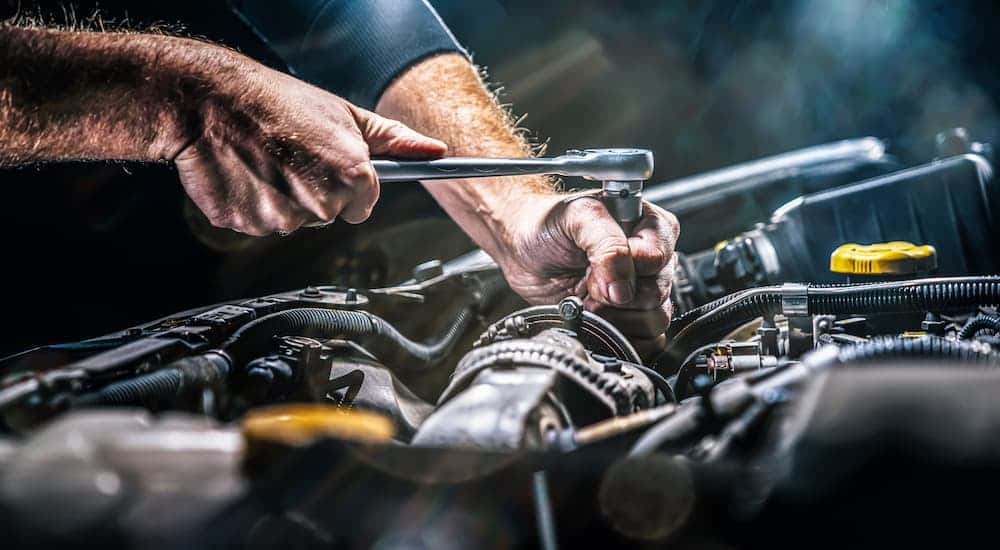
When it comes to automotive repairs, time is of the essence.
It’s best to be proactive in your approach to car maintenance, especially when it comes to seemingly minor repairs.
Even the smallest issues can escalate quickly, and what could have been fixed for a minimal charge ends up costing exponentially more.
You can avoid incurring extra expenses by addressing problems as they arise at your local service center for auto body repair in Cincinnati.
The following is a list of repairs that are easy to ignore, but that you should fix right away in order to skip shelling out money for larger repairs that could have been avoided in the first place.
Invest in immediate small repairs for greater savings down the road.
Oxygen sensor
This device measures the fuel-air ratio of your car’s engine and controls pollution.
Too much fuel in the engine causes the engine to run too rich, while an engine running lean means there is not enough fuel.
In either case, the oxygen sensor communicates with the engine in order to help it run more efficiently.
If your “check engine light” has come on, more often than not, the oxygen sensor is the culprit.
Oxygen sensor repairs or replacements run an average of $250, which is nothing compared to the costs associated with ignoring that engine light.
Turning a blind eye to a broken or faulty oxygen sensor could result in your car losing as much as forty percent of its gas mileage, not to mention the superfluous cost of wasted gas from excessive fill ups.
Oxygen sensor issues can also zap your car’s power, causing sluggish acceleration, and possibly damaging your spark plugs and catalytic converter.
Converters, made with precious metals like platinum, palladium, rhodium, and gold, can cost anywhere from $500 to $1,000 to replace, depending on your car’s make and model.
Why risk it?
Replacing the sensor is still your cheapest option.
Windshield Dings
We’ve all been there. You know that heart stopping ping.
There you are, minding your business as you zip along the highway when some small detritus launches out of a truck bed or a stone kicks up from the road, hitting your windshield with just the right amount of contact to leave a mark.
No matter how small that mark is, you are well-advised to fix it sooner than later.
A tiny little ding or dent can be fixed by a windshield repair service, of which there are thousands, for minimal cost.
Quite often a spray epoxy will fill in and smooth the offending divot and only cost you about $100.
But if you decide to wait, you give that ding a chance to stretch itself right across your windshield, potentially interfering with your view and hindering your driving safety.
If you wait until the windshield needs to be replaced, you’ll be coughing up at least $500.
Easy, Sparky
We all know that it takes just a little spark to create a serious reaction.
Spark plugs contain electrodes which fire electricity to the engine.
If they wear out, your engine’s performance will be compromised, possibly causing it to idle or surge, which can decrease its power and acceleration capabilities.
A blown spark plug might allow raw gas to spill into the catalytic converter, which we’ve already determined is a costly piece of equipment to replace.
Faulty spark plugs might also mean that your car fails your state’s pollution tests, meaning you could incur additional fees.
New spark plugs and spark plug wires will set you back about $315, which is not nearly as far back as a new catalytic converter will send you.
Roll Call
If your car feels a little shaky negotiating descents, the tires may be unbalanced.
In addition to making you feel insecure behind the wheel, unbalanced tires can lead to uneven wear, which will eventually require tire replacement, and we all know how expensive a new set of tires can be.
Unbalanced tires can also compromise your suspension system and possibly require new shocks and struts.
Shaky tires can shake up your car’s handling, so it’s best to get your tires balanced and avoid additional repairs.
Tire balance service generally starts at about $15.
Way cheaper than new tires.
Route Canal
The PCV (positive crankcase ventilation) valve reroutes escaped fumes from around the cylinder and away from the crankcase, sending them back to the combustion system so that they burn, thereby increasing fuel efficiency and decreasing pollution.
Without an effective PCV valve, pressure can build in the crankcase, causing oil to leak through the gaskets, creating engine sludge which causes your engine to struggle against insufficient power, slowed acceleration, and weakened fuel economy
A replacement PCV valve and hose runs about $100, offering significant savings over oil leaks and protecting your engine’s cylinders from sustaining potentially even greater damage.
Take Your Temperature
Your engine’s temperature is closely monitored by the thermostat in your car.
Heat is necessary for the engine to burn fuel efficiently and allow oil to flow properly.
Coolant flows to the engine to keep it from running too hot.
If you ignore the thermostat and your engine overheats, the coolant can boil over, resulting in a blown gasket, or a cracked head.
Blown gaskets cost anywhere between $1,200-1,600 to replace, while a new thermostat prices from $130-180.
The numbers speak for themselves.
Protect the Green – Yours and the Environment
If you notice that your engine is lagging, idling, or stalling, you might also notice a reduction in gas mileage.
The EVAP, Evaporative Emission Control System, vacuum hoses maximize mileage, while minimizing pollution being released into the atmosphere, which is the result of gas evaporating from the tank.
Designed to collect and reroute the vapors into a storage container, the EVAP hoses then draw the fumes into the intake manifold where they are burned off.
If your EVAP light illuminates red, you can replace the EVAP vacuum hoses for just under $100.
Your engine will thank you with improved performance.
Engine Coolant Temperature Sensor
The engine coolant temperature sensor works in conjunction with the powertrain control module (PCM), which is essentially the engine’s computer.
The PCM is responsible for balancing the ratio of air and gas allowed into the combustion chamber, according to the engine’s operating temperature.
The engine coolant temperature sensor functions by alerting the powertrain of the engine’s internal temperature, and the PCM acts accordingly, either by acting on the spark, upping the cooling fan speed, or otherwise tweaking the engine operations for optimal performance.
Suppose your engine coolant temperature sensor malfunctions, the powertrain control module might think that the engine temperature is cool, and will needlessly adjust the fuel mixture, which wastes gas and taxes the catalytic converter.
All of these are potentially costly repairs, and easily avoided for about $150, the price of a new engine coolant temperature sensor.
Never in the history of problems has ignoring them made them go away.
The same is true of car repairs.
Ignoring that check engine light will not miraculously cause your car to fix itself.
Take control of your car maintenance.
At the first sign of trouble, bringing your car in for auto body repair in Cincinnati.
The service professionals there will help you protect and extend the life of your vehicle before you encounter any serious and costly issues.
Your car and your wallet will thank you. Guaranteed.

0 comment(s) so far on Repairs You Don’t Want to Wait On