



Three Surprising Performance Features You’ll Find on the 2026 Chevy Corvette E-Ray
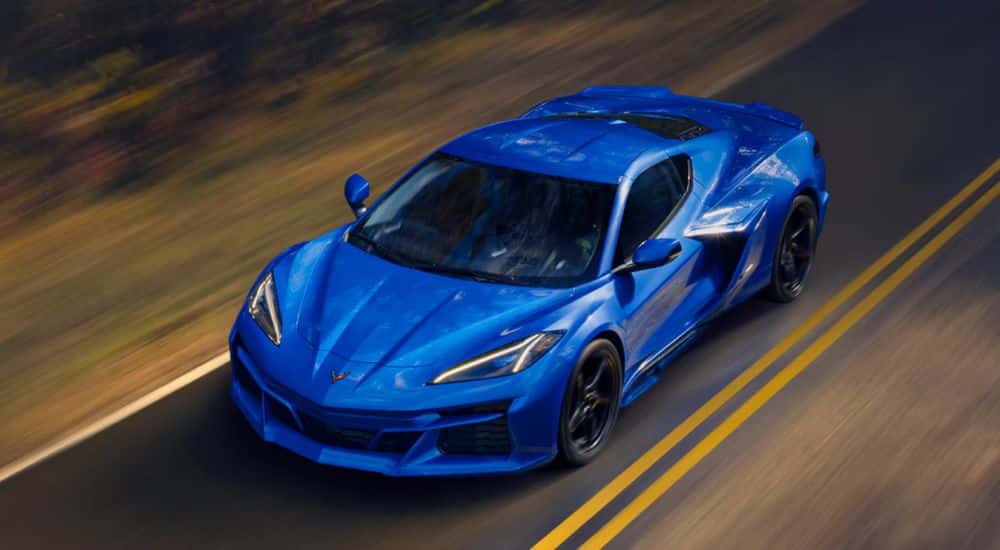
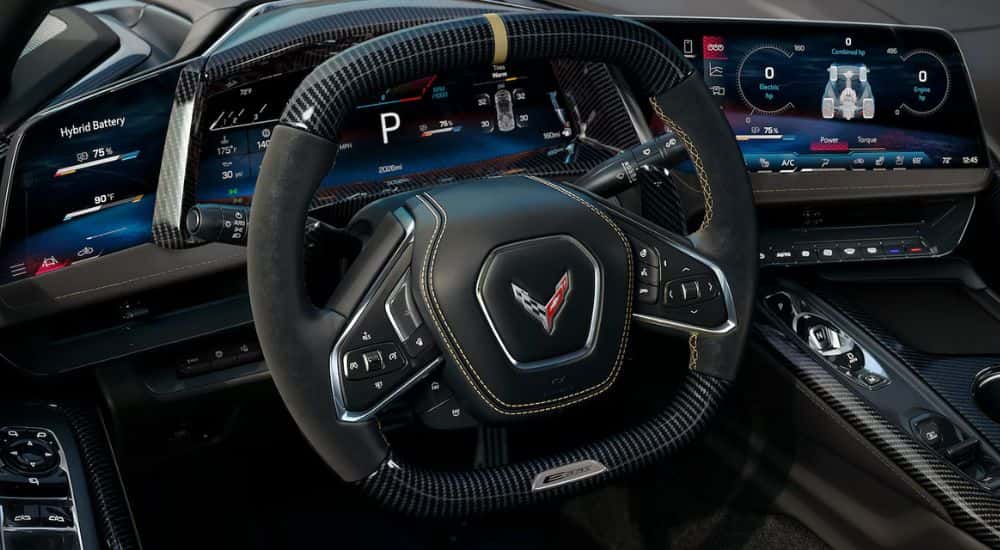
The 2026 model year is a big one for the Chevy Corvette E-Ray. The hybrid sports car has been treated to an all-new interior, with Chevy revamping the cabin in response to customer feedback. It’s tough to argue with the results, especially when you catch sight of the new 12.7-inch touchscreen infotainment system and 14-inch digital gauge display. Most models would stop there, but the Corvette also boasts a 6.6-inch auxiliary touchscreen on the left side of the steering wheel that lends the cabin a cockpit-like feel. Throw in a new wireless smartphone charging pad, additional ambient lighting, and genuine aluminum trim, and the 2026 Corvette E-Ray delivers a driving experience you won’t soon forget.
While these interior upgrades are sure to keep the hybrid fresh as it moves into its third year on the market, its performance, not a cutting-edge interior, tends to draw drivers to the Corvette hybrid. The high-performance model can outpace even some of the segment’s priciest models, and proves that America’s homegrown supercar hasn’t lost a step as it embraces a new era of hybrid technology. As the 2026 model makes its way to the market, we thought it would be a perfect time to see how the 2026 Chevy Corvette E-Ray compares to some of its pricier European counterparts and discover some of the unique features that have made the E-Ray the first name in the American hybrid performance segment. From acceleration and output to launch control systems and data-recording tech, join us as we peruse the Corvette E-Ray’s performance profile.
Performance
We’ll start with the most obvious stat for any high-performance model: horsepower. It might not be the only metric that matters, especially if you’re more focused on acceleration than top speed, but it still provides a handy basis for comparing different models.
The Corvette hybrid is no slouch when it comes to the goods you’ll find under the hood, with the sports car packing a 6.2L V8. Chevy’s LT2 engine is capable of producing almost 500 hp by itself, which is significantly higher than most of the Corvette’s sub-$100,000 sports car rivals. However, it’s the addition of an electric motor on the front axle that really allows the hybrid to shine. The E-Ray’s 160-hp electric motor brings the total output up to 655 hp.
This kind of power sees the Chevy easily outclass the Ford Mustang Dark Horse (500 hp), Toyota GR Supra (382 hp), and Lexus LC (471 hp). The Corvette faces stiffer competition from its European counterparts, but still tops the 532-hp Porsche 911 Carrera GTS. Even when it’s not the most powerful model on paper, the Corvette E-Ray can match and even surpass the zero-to-60-mph times of the McLaren Artura and Porsche 911 GTS hybrid. Chevy’s high-performance model can get up to speed in just around 2.5 seconds, while the McLaren and Porsche models take almost 3.0 seconds to achieve the same pace.
The same holds true at longer distances, with the E-Ray (10.5 seconds) besting the Artura (10.7 seconds) in a quarter-mile race. Sure, it might not hit the sub-10-second benchmark of the Porsche Taycan Turbo GT (9.2 seconds), Lucid Air Sapphire (8.9 seconds), or the E-Ray’s purely gas-powered cousin in the Chevrolet Corvette C8 ZR1 (9.6 seconds), but it also costs significantly less.
Launch Control
The Corvette E-Ray’s hybrid design doesn’t just make it one of America’s most powerful sports cars. It also allows drivers to rocket off the line like a veteran drag racer. The E-Ray’s Performance Traction Management (PTM) system includes a launch control feature that takes all of the guesswork out of getting a good start. Simply activate Sport or Track mode, then double-click the “ESC” button, and the Corvette will do the rest, adjusting various settings, reading road conditions, and tuning the car’s stability and traction control systems. Most importantly, the PTM employs the Corvette’s electric motor to preload torque to the front wheels.
This marks a significant improvement over traditional launch control systems, which must precisely balance a half-dozen factors such as engine RPM, clutch engagement, and torque split to ensure consistent launches. The instantaneous torque from the E-Ray’s electric motor drastically simplifies the process, providing a better bite off the line as soon as the brake is released, without waiting for the gas engine to reach peak torque. This approach noticeably reduces wheelspin, effectively transferring power to the pavement and enabling the E-Ray to achieve a 2.5-second zero-to-60-time that’s sure to make you seem like a regular at your local track day. The AWD system can also effectively direct the Chevy’s torque output where it’s needed most, which can be useful on slick pavement, uneven roads, or in chilly temperatures that might otherwise affect performance.
McLaren’s hybrid Artura benefits from a similar launch control system, but it doesn’t take advantage of its electric motor in quite the same way. Instead of being tasked with providing instant torque, the motor simply provides a little power boost, while the traditional gas engine handles the majority of the work. The Porsche 911 Turbo S has been lauded for its launch control system, but the German sports car still can’t match the instant torque of the Corvette E-Ray. The Corvette’s PTM goes a long way toward smoothing out the car’s learning curve, allowing drivers to take advantage of the Corvette’s full performance potential without the trial-and-error approach.
Performance Data Recorder
No matter what sort of automotive antics you manage to achieve behind the wheel of the Corvette E-Ray, you’re always going to have your doubters. Luckily, Chevy’s high-performance car allows drivers to provide receipts thanks to its integrated Performance Data Recorder (PDR). Standard on the 2LZ and 3LZ trim levels, the built-in PDR app delivers a wealth of data that’ll legitimize your bragging rights while providing important feedback that could help to shave seconds off of your lap time.
The E-Ray’s performance app was already one of the most comprehensive systems in the high-performance segment, and it’s only improving with the debut of the new model. The original PDR allowed drivers to access a wide range of live performance data, including power distribution, torque output, and battery/engine metrics. The PDR system represents a significant improvement over the old-fashioned tachometer you’ll find in many models, and it’s only getting better as the E-Ray continues to evolve. The 2026 model sees the PDR gain some fresh functionality, including acceleration timers, temperature, tire-pressure and g-force gauges, and much more. The PDR even serves as an integrated dash cam that can be used to record high-definition video and audio. Whether you want to plot a new path around the track or simply relive a particularly speedy trip around the circuit, the PDR’s built-in video recorder is here to help.
A factory-installed telemetry system that also records live video certainly isn’t the norm, even on the pricer end of the high-performance segment. Just take the Porsche 911 Turbo S, for example. Despite ringing in at around $275,000, the Porsche provides the same functionality you’ll find on the Corvette. McLaren’s Artura is a little more affordable at $230,000, but its version of the PDR doesn’t include any audio/visual recording capabilities. The same goes for the $260,000 Ferrari Roma, which proves just how much value the 2026 Corvette E-Ray can provide.
Up The Excitement With The E-Ray
The Corvette E-Ray is living, gas-burning proof that you can teach an old dog new tricks. The iconic American sports car has been turning heads and winning hearts for over 70 years, and is only improving as Chevy leverages new and emerging automotive technology to keep the Corvette at the top of its game.
The debut of the hybrid Corvette might have raised a few eyebrows amongst those powertrain purists who will settle for nothing less than V8 power, but a (very) quick lap in the E-Ray should be more than enough to dispel any such bias. The most impressive part of the new 2026 model might just be how much it’s already changed, compared with the 2024 version. The brand has been very receptive to customer feedback, addressing drivers’ concerns without losing sight of the Corvette’s high-performance heritage. When you’re ready to take a spin in a piece of American automotive history, the new 2026 Chevy Corvette E-Ray is waiting for you here at McCluskey Chevrolet.

0 comment(s) so far on Three Surprising Performance Features You’ll Find on the 2026 Chevy Corvette E-Ray