



Tire Education From Your Always Dependable Cincinnati Car Dealership
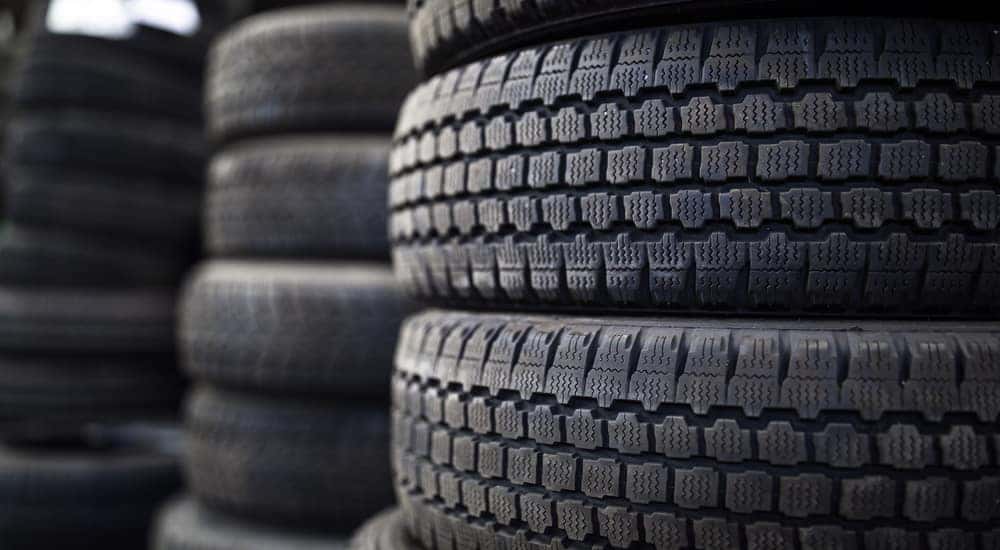
The wheel is the most historic invention that has ever graced society with its endless utility. In fact, the wheel has now been manufactured and enhanced throughout many years of innovation to create what we call the tire. Unlike engines, transmissions, and all that other fancy automotive parts we use to make cars move, tires are the always reliable heart of every vehicle and should be treated with respect. Tires may appear to be simplistic in design, but they have more depth to them then we could ever imagine. Knowing more about tires will save you money, increase your vehicle’s performance, and keep everyone who enters your vehicle safer. So, here is a crash course on tire education to get the wheels turning in your mind.
The Function of a Tire
Tires have four main functions when it comes to vehicles. The first is that the vehicle will use the tire strength and air pressure to become a weight-bearing support to balance, hold, and support the vehicle’s massive weight. The second function a tire will perform is to reduce the vibrations of the vehicle and absorb shock. Thirdly the tires will take power given by the engine and put it to physical use to allowing the vehicle to move and brake with ease. Lastly, the tires assist with supporting the vehicle’s movements by turning them with the steering wheel as the direct connection. In summary, tires are the primary support and movement system that make one big difference to any vehicle and consequently require simple yet essential care and maintenance.
Tire Size
Understanding the size of a tire can sometimes feel like cracking some elaborate code. Tires have numeric and alphabetic system associated with them used to indicate relevant information that can be known universally.
You will often find five series of numbers and letters on a tire. The first letter you see is the service description to let you know if it is a passenger, temporary, light truck, or special trailer tire. The first two numbers are the width and the aspect ratio. While the third number you see is the RIM or diameter of the wheel in inches. The fourth number you see is the load index, and finally, the last letter is the speed rating. It may seem confusing at first, but it is something you can eventually comprehend without much thought.
The speed rating is as followed:
- S = 112 mph
- T = 118 mph
- U = 124 mph
- H = 130 mph
- V = 149 mph
- Z = Over 149 mph (older classification)
- W = 168 mph
- Y = 186 mph
- (Y) = Over 186 mph
Tire Quality
The Uniform Tire Quality Grades or UTQG is a rating system that all tire manufacturers are required to perform by the U.S Department of Transportation. The UTQG measures various aspects of all types of tires including the treadwear, traction and temperature resistance.
A common factor that the UTQG measures are the treadwear grade of a tire, which is an indication of the rate that a specific tire will wear. While this does not tell you the true mileage of a vehicle, it is useful as a reasonably accurate comparison tool. For example, if given the exact same driving condition to the same brand, a tire with a grading of 400 can be expected to last twice as long as a tire graded 200.
The traction rating is basically how well a tire can stop on wet pavement. A rating of “AA” (highest), “A,” “B” or “C” will show a tires braking distance. This is not the same as turning on wet corners though.
The temperature resistance rating is all about how well a tire can handle the heat. This rating is graded from “C” (lowest) to “B” and “A” ratings. All tires are inflated properly when performing this rating test.
Tire Maintenance
Tires are a vital part of your vehicle, and they need to be properly taken care of. Here are a few of the most important tips for keeping your tires in the best condition possible.
Always check your tire pressure. Many gas stations these days will have an easy to use tire pump that you can use for free. There is also some amazing new technology that allows your vehicle to tell you when its air pressure is low without even getting the gauge or going out. This kind of technology is found onboard many newer vehicle models, and systems even off the ability to check your tire pressure from your smartphone via a user-friendly mobile app.
Here are a few more tire pressure tips:
- Check the pressure of all your tires monthly
- Check your tires before making a long trip or more frequently during cold seasons
- Never deflate a hot tire
Know the signs that your tire is suffering. Visual signs include over or under inflation, treadwear on one edge of the tire, erratic tread wear, or raised portions of the tread or sidewall. Some symptoms you may notice while driving include unusual vibrations, uncommon noises, or pulling to one side.
Three maintenance procedures you must always have done to your tires regularly are tire rotation, tire balancing, and wheel alignment. These are meant to maximize the life expectancy of the tires on your vehicle, and increase the safety of everyone who enters your vehicle. When all of these should be performed will be found in the owner’s manual of your vehicle, however checking with your local dealership like McCluskey Chevy can also provide you with the answer and even a more personalized recommendation.
We at McCluskey Chevy are proud to provide our community of Cincinnati with not just vehicles and tires, Cincinnati drivers can trust, but also with the knowledge to truly admire the culture of automotive brilliance. Every aspect of a vehicle is something special, and if you ever feel even the slightest need to learn more about your automotive, feel free to ask any of our well-informed staff members the next time you stop by.

0 comment(s) so far on Tire Education From Your Always Dependable Cincinnati Car Dealership