



A Beginner’s Guide to Honda Transmission Maintenance
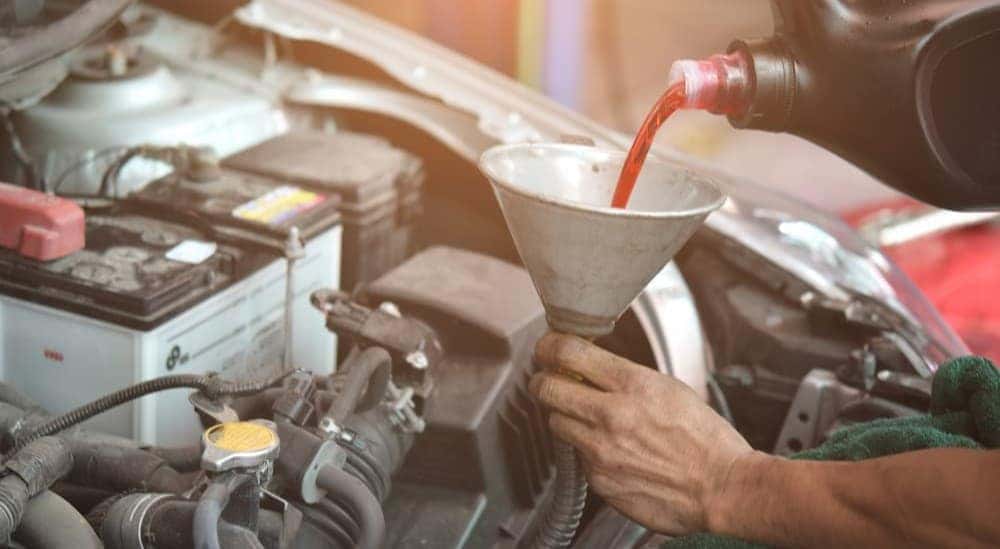
Maintaining the transmission in your Honda is crucial for optimal performance. If you neglect the transmission, it eventually stops transferring power to the wheels—and then your Honda won’t go. McCluskey Chevrolet’s Honda service center near Monroe is here to care for your Honda’s transmission whenever needed.
That said, transmission maintenance isn’t as common as other tasks, such as oil changes and tire rotations, so many Monroe-area Honda drivers are unaware of how to handle it. How often should you schedule its routine maintenance? What is involved? What are the signs that a Honda transmission needs attention? Our experts answer those questions and more in this guide.
How Often to Change Transmission Fluid
Regularly changing the transmission fluid in your Honda is the best way to guard against problems. The question is how frequently to do it. This varies based on the model, transmission type, and driving conditions. Many modern Honda service manuals don’t provide an official schedule; instead, they utilize the Honda Maintenance Minder alert system to notify you when it’s time for a fluid change.
Nevertheless, there are some guidelines you can follow to stay on track. Erring on the side of caution is always best; it’s better to change the fluid a little too early than a little too late.
For Normal Driving Circumstances
If you’re a typical Monroe resident, you do most of your driving in what are considered normal conditions. This involves a mix of highway and city driving, and in temperatures ranging from 32 to 90 degrees. You also don’t do much towing or hauling and mostly use your Honda on paved, clean, flat roads.
For these conditions, in a Honda with an automatic transmission or dual-clutch automatic, the typical schedule is to change the fluid every 60,000 to 100,000 miles. You should increase the frequency as the vehicle gets older. For Hondas with a continuously variable transmission (CVT), the standard maintenance recommendation is every 30,000 to 60,000 miles. The fluid in these transmissions is more sensitive and thus wears out faster, requiring more frequent maintenance.
For Severe Driving Circumstances
Some Monroe drivers regularly get behind the wheel for “severe” situations. This includes lots of short trips (five miles or less), driving in extremely hot or cold temperatures, frequent stop-and-go traffic, dusty or muddy roads, hilly terrain, and heavy towing.
The rule of thumb for severe driving conditions is to perform most maintenance tasks twice as often, and this includes changing the transmission fluid. So, if you’re a “severe” driver, get your automatic transmission fluid changed every 30,000 to 50,000 miles, and your CVT fluid changed every 15,000 to 30,000 miles.
An Overview of Transmission Fluid
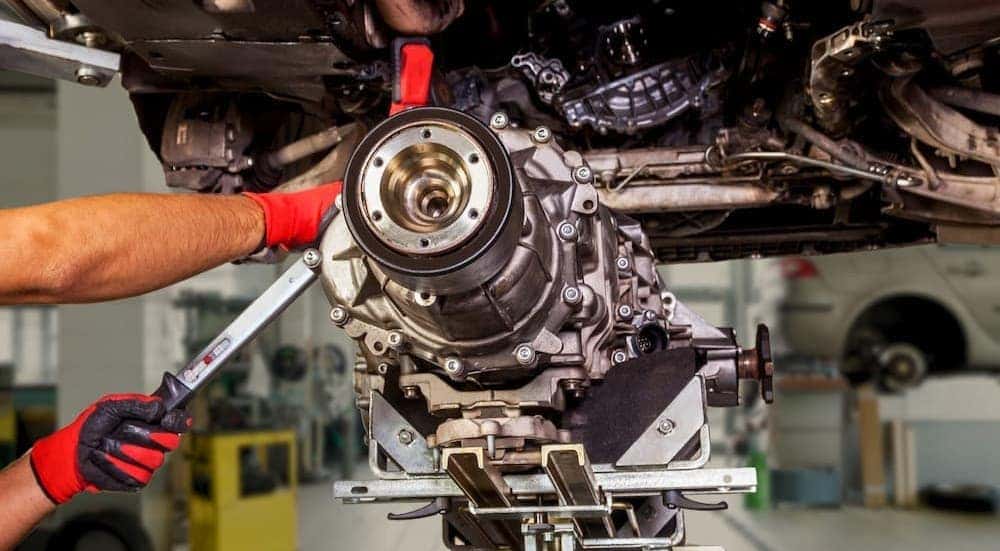
Regardless of whether your Honda has an automatic or a CVT, you must use the proper fluid or an approved equivalent as listed in the owner’s manual. Failing to do so can cause performance problems, damage the transmission, and void the warranty. You should also never mix fluid brands or types, as each has unique characteristics that may interact negatively.
A certified Honda service center will always use OEM transmission fluid, assuring your peace of mind. If you’re visiting an independent shop, confirm they’re using OEM fluid or an alternative that’s acceptable under Honda’s warranty terms.
Can I Change It Myself?
Theoretically, a DIY mechanic can change a Honda’s transmission fluid if they have the right tools and shop space. However, we don’t recommend this for two reasons. One, you’re on your own if any issues arise during the process—and just like using the wrong fluid, problems resulting from DIY maintenance typically aren’t covered under warranty. Visiting a certified service center ensures quality work that comes with a warranty.
Second, transmission fluid is a hazardous material that requires careful handling, storage, and disposal. Professional technicians possess the knowledge, tools, and equipment to safely handle old fluid, thereby minimizing the risk of harm to people or the environment.
Drain-and-Fill vs Flush
There are two types of Honda transmission fluid changes to consider. The standard fluid change, also known as a “drain-and-fill,” consists of draining the transmission pan, refilling it, and replacing the transmission filter. Depending on the pan size, this replaces 30-50% of the existing fluid. A drain-and-fill is the normal route if there are no transmission issues, particularly if you change the fluid more frequently.
If you’ve gone longer between fluid changes and/or the transmission is older, a flush may be a more suitable option. Your technician will drain all the old fluid, cycle a special cleaning solution through the transmission system to remove any built-up contaminants, then change the filter and fill it with fresh fluid. This process takes longer and is more expensive, but in certain cases, it can help restore a transmission’s performance and stave off wear. Your mechanic can recommend the best service for your situation.
Checking Your Honda’s Transmission Fluid
Even if you’re following the recommended maintenance schedule, it’s still a good idea to check the fluid periodically. This can alert you to any potential issues early. Check the fluid at each oil change or if you suspect a problem; the engine should be warm, and the vehicle should be parked on a level surface.
Nowadays, most Honda owners’ manuals recommend that the transmission fluid be checked by an authorized dealership or repair shop. If your transmission has a dipstick, however, you can check it yourself with relative ease. For most automatic transmissions, the dipstick is located under the hood, toward the rear.
First, remove the dipstick and look at the level. The stick will have “full” and “low” markings; if the fluid is between these marks, you’re good to go. Next, wipe the dipstick on a clean, white paper towel and examine the color; the fluid should be pink or bright red. (And remember to put the dipstick back when you’re done!)

Signs You Need Servicing
Along with regular fluid checks, Monroe drivers should always be on the lookout for trouble indicators. Here are some signs you need to bring your Honda in for immediate transmission care:
- The code to replace the transmission fluid appears in the Honda Maintenance Minder dash display.
- The transmission system indicator starts blinking, and a warning message pops up.
- The fluid is dark red or brown, and/or is foamy and bubbly.
- The fluid contains metal flecks or other debris.
- You’re experiencing issues with the transmission’s performance, such as problems shifting or staying in gear.
- You see a puddle of transmission fluid beneath the car.
- You hear grinding, whirring, or other odd noises.
- You notice a burning smell.
Choose McCluskey Chevrolet for Honda Transmission Maintenance
The importance of transmission maintenance can’t be overstated, as it can be the difference between years of trouble-free driving and incurring big, expensive repair bills. By following the recommended schedule, adjusting it according to your driving habits and conditions, entrusting your car to qualified professionals, and paying attention to warning signs, you can expect the reliable transmission performance that Honda is known for.
Wherever you bought your Honda, you can count on McCluskey Chevrolet for its transmission maintenance and more. Our certified technicians are here to provide Monroe Honda drivers with fast, high-quality service at the best prices. Our state-of-the-art Honda service center is open seven days a week; schedule an appointment online or drop in during business hours. We also provide a complimentary car wash and a 27-point video safety inspection with every appointment.

0 comment(s) so far on A Beginner’s Guide to Honda Transmission Maintenance