



Top Reasons Your ‘Check Engine’ Light is On
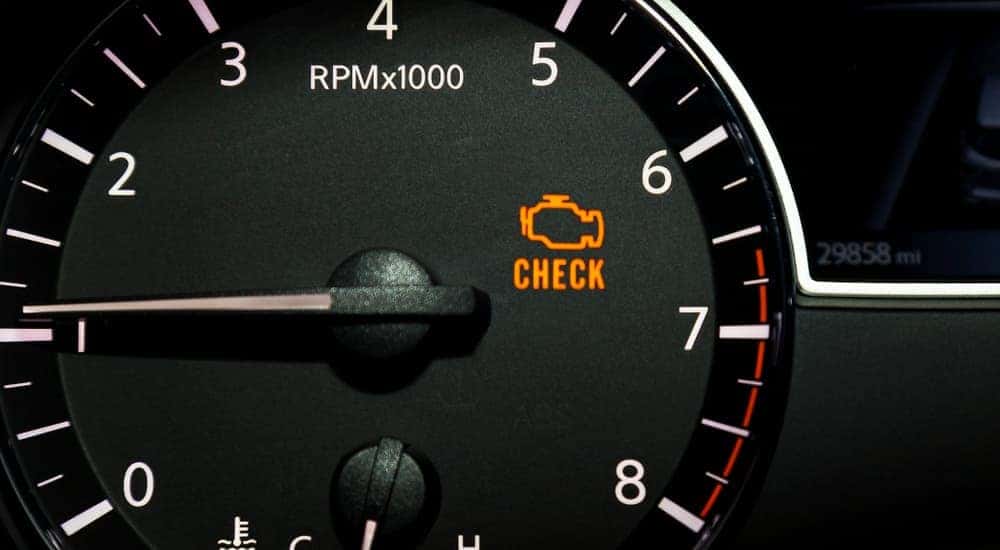
As an auto repair center in Cincinnati, Ohio, we are all too familiar with the “check-engine” light and the pure dread it causes drivers. No one wants to get into their car first thing in the morning and be hit with bad news before even getting to work.
All too often, drivers ignore the light because it’s easier than dealing with it (or so they think), or they believe that it is simply a glitch in their vehicle’s computer system. Making either of these assumptions will lead to bad things in the future for the health of your vehicle, not to mention your wallet. So don’t ignore that light any longer! We have compiled a list of the top reasons your “check engine” light is on, and what you can do to fix them. Stop dreading the evil light, and finally do something about it!
Likely Reasons Your Check Engine Light is On
1. Oxygen Sensor Needs Replaced
This part of your vehicle monitors the unburned oxygen from the exhaust. It also monitors how much fuel is burned, and when it fails, it will cause a decrease in gas mileage. The sensors get covered in dirt and oil ash over time, and will reduce the functionality of the sensor. Avoid a busted catalytic convertor down the line which can cost $2,000, and pay an auto repair shop around $200 to fix it.
2. Loose Gas Cap
When a gas cap is loose, fuel vapors escape and throw your car’s system for a loop. Before taking your car in, make sure the cap you have is tightened securely, and that there are no cracks. Gas caps run about $5 at an auto parts shop – an easy and inexpensive fix.
3. Catalytic Converter Failure
This carbon monoxide converter is important to run your car efficiently. Most of the time this will need to be replaced, which can cost up to $2,000 – so be sure to get your vehicle in to an experienced mechanic ASAP.
4. Mass Airflow Sensor Failure
This handy device tells your car’s computer to add the correct amount of fuel by gauging the amount of air coming through the engine. Your car will likely fail emissions, stall out, and have a significant decrease in gas mileage. To avoid this problem, keep your air filter fresh by replacing it once a year. The replacement cost at a mechanic can be anywhere between $200-$400, so be sure to keep your air filter fresh and clean to avoid this cost.
5. Spark Plugs and Wires Need Replaced
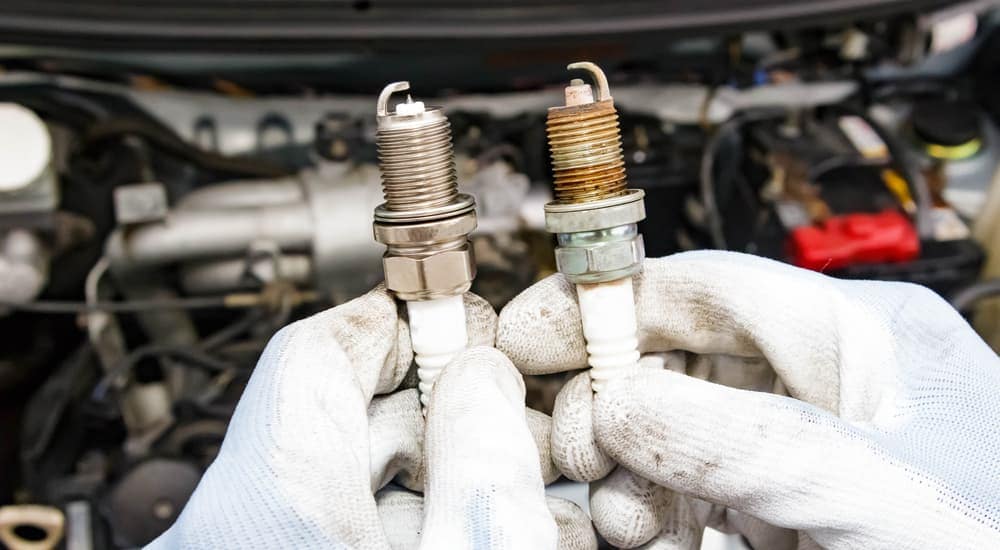
Failing spark plugs mean misfiring, and a resulting jolt in your car’s acceleration. If your car is newer and has fewer than 100,000 miles, your spark plugs should be fine. If they do fail, get them fixed immediately. It’s a cheap fix and will help avoid a ton of other costly repairs down the line.
6. Faulty Ignition Coils
Another reason why the check engine light may be on in your new Chevy ties in with the aforementioned spark plugs and wires. Ignition coils are responsible for converting low voltage power from the battery, which in turn activates the spark plug igniting the fuel/air mixture inside the engine’s cylinders. Today’s gasoline-powered vehicles have one ignition coil per cylinder. That means that 4-cylinder engines have four ignition coils, V8 motors have eight ignition coils, and so on. Faulty ignition coils can result in many issues, including lethargic acceleration, engine misfirings, and even unexpected stops. That’s right. A single bad ignition coil can cause the engine to turn off unexpectedly, which can be very dangerous.
Please note that diesel vehicles do not have ignition coils. So, if you own a diesel-powered Chevy, you can rule this one out.
7. Evaporative Emissions Purge Control Valve Needs Replacing
As part of the vacuum system, the evaporative emissions purge control valve is in place to prevent fuel vapors from escaping into the atmosphere. Sometimes, the purge valve can get stuck in either an opened or closed position. It can also cause issues if the timing for opening and closing is off. Whatever problem the purge valve is having, it can cause a leak in the vacuum system, which can lead directly to engine problems.
8. Evaporative Emissions Purge Control Solenoid Needs Replacing
Sometimes referred to as a canister valve solenoid, the evaporative emissions purge control solenoid is also an important part of a working vacuum system. Responsible for rerouting harmful pollutants and toxic fumes back into the engine, it functions as somewhat of a switch. When it malfunctions, you will feel rough idling and experience difficulty starting the engine. It can mess up the internal combustion process and cause the fuel economy to drop significantly.
9. Bad Fuel Injectors
If your vehicle uses fuel injection technology, faulty fuel injectors may be the culprit behind your illuminated check engine light. Fuel injectors are the key component in the vehicle’s fuel delivery system. These small parts are designed to collect fuel and transform it into a high-pressure mist. Then, the fuel injectors spray this fine mist into the engine. How much fuel these injectors take and when they release it into the engine varies depending on the vehicle. If you start hearing rough sounds coming from the engine while your check engine light is on, that could be an indicator of bad fuel injectors.
10. The thermostat Needs Replacing
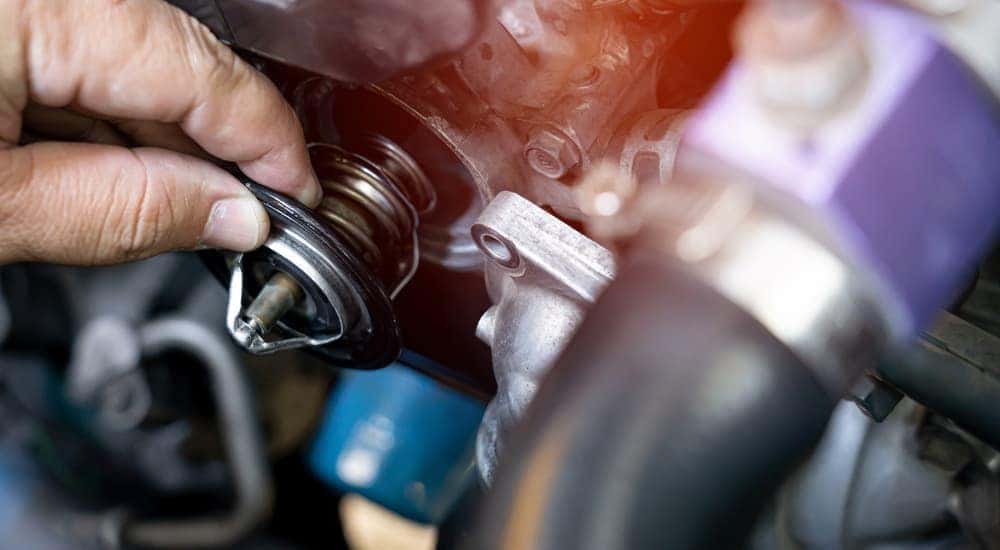
Finally, if none of the aforementioned issues were the underlying problem, then you may want to take a look at the thermostat. This is not the one that shows you the temperature outside the vehicle. This thermostat is positioned between the engine and the radiator. Its main job is to stop the liquid coolant from rushing into the engine while the engine is warming up. You will notice the thermostat working a lot harder during the winter months than at any other time of the year. If the check engine light comes on and you also notice drastic fluctuations in the temperature of the engine, a faulty thermostat may be to blame.
Check Engine Light FAQs
Q: What is the check engine light?
A: The check engine light is located on your vehicle’s dashboard. Illuminating in either amber, orange, or yellow, the check engine light is an indication that something is amiss. Sometimes, technicians refer to it as the malfunction indicator lamp. Essentially, a distress signal is being sent to your vehicle’s computer. That distress signal is a code that will tell you exactly where the problem is once you decipher it.
Q: Is it safe to drive with the check engine light on?
A: Yes. At least, you can drive for a little while with the check engine light on. Sometimes, the issue is something as simple as a loose gas cap. Other times, it can be more severe. However, we do recommend that you bring your vehicle to our service department so that our certified technicians can take a look at it.
Q: How do the technicians know what’s wrong?
A: Our mechanics here at McCluskey Chevy will use a computerized device known as a code reader. They will hook the code reader up to your vehicle and run diagnostics. Once the code is deciphered by the computer, the technician will be able to pinpoint exactly where the issue is and fix it.
Q: Why is my check engine light flashing?
A: A flashing check engine light is a much more serious warning. This indicates that there may be a problem with the catalytic converter, which can cause dangerous overheating. If your check engine light is blinking, then you need to get the vehicle into our shop as quickly as possible.
Q: Are all check engine lights made equally?
A: Yes. Since 1996, all check engine systems have been standardized under the OBD-II protocol. Prior to 1996, different automakers had various ways to alert the driver to an issue. It was very confusing and difficult for technicians to pinpoint the problem. That’s why the check engine light systems became standardized.
Q: What should I do if my check engine light comes on?
A: The first thing to remember is that you shouldn’t panic. Even if the check engine light is flashing, try to remain calm. If the light is flashing, turn off the vehicle and get in touch with our service department immediately. Our experts will give you advice on how to handle the next steps from there. If the check engine light is solid, then you should first try tightening the gas cap. If the light doesn’t go off, then there may be another underlying issue like the ones we mentioned earlier in this post. Get in touch with our service experts, and they will get you the next available appointment to see what’s going on with your Chevy.
Q: Is the check engine light the same as the service light?
A: No. The service light, also sometimes referred to as the maintenance light, is much less complicated. It indicates that you need to have routine maintenance performed on the vehicle. Routine maintenance includes an oil change, fluid refills, checking the air filter, and so on. The service light and the check engine light are two different symbols. You can take a look inside the owner’s manual to figure out which one is which.
Q: How can I prevent the check engine light from coming on?
A: Proper maintenance and vehicle care will help keep the dreaded check engine light at bay. However, sometimes it’s unavoidable. The good news is that our technicians can fix whatever issue is at hand.
Q: Why is the check engine light on in my new Chevy?
A: Most people don’t expect the check engine light to come on in a new vehicle. If you recently purchased a new Chevy and the check engine light has come on, it may indicate a dead battery. If you forgot to turn off the cabin lights, this could cause a brand new battery to die quickly.

0 comment(s) so far on Top Reasons Your ‘Check Engine’ Light is On